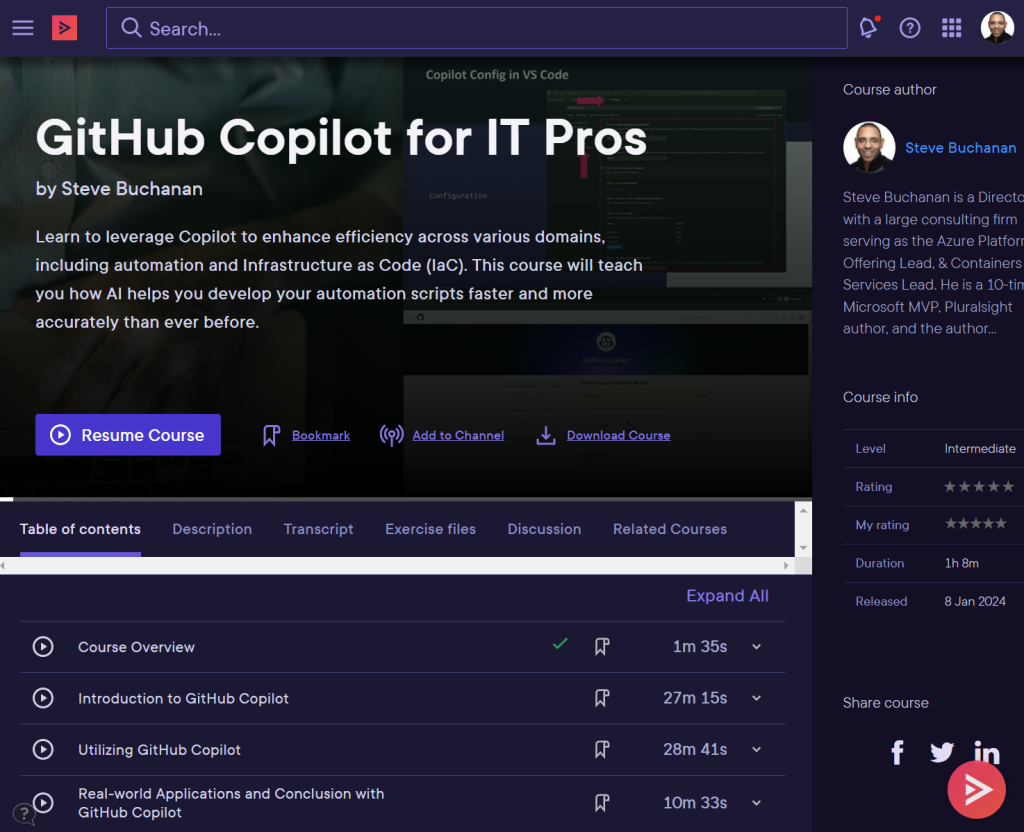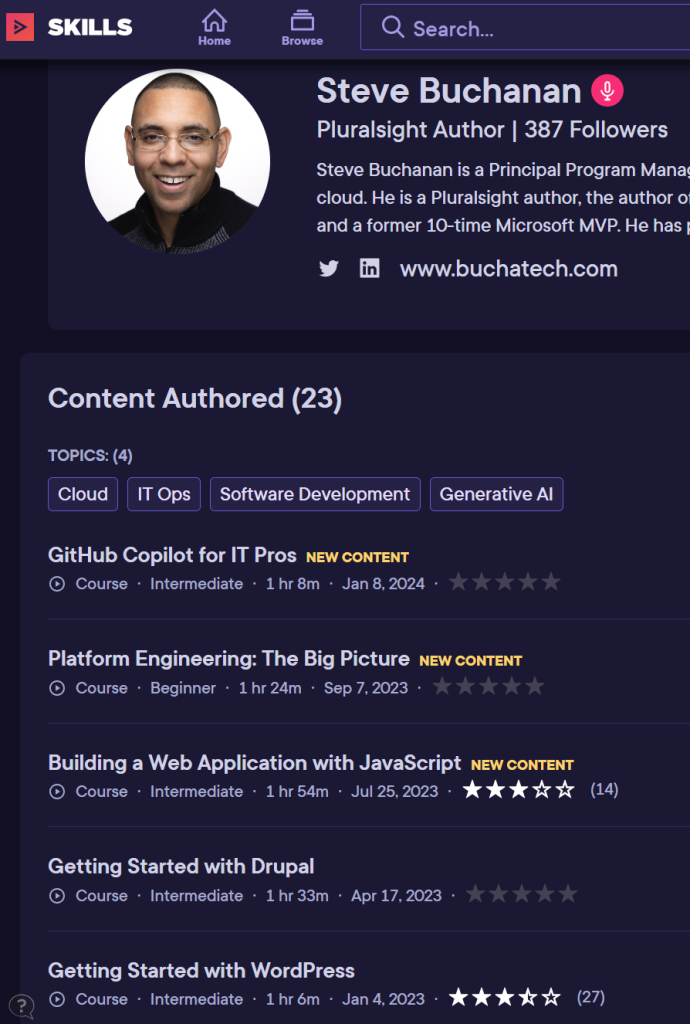

I am excited to share that my 29th Pluralsight course is now live titled Building Applications with OpenAI. This course guides developers through creating modern AI powered applications using OpenAI APIs. Whether you are just getting started with generative AI or looking to integrate it into real projects, you will walk away with practical skills you can use right away.

This was a fun course to build. In this course you will learn how to integrate OpenAI into real world applications from end to end. We begin by setting up the OpenAI API, handling authentication, and designing effective prompts. Then we build a full stack web app that uses AI to analyze and classify data while exploring best practices for deployment, performance monitoring, and error handling. By the end you will have the confidence to build, deploy, and scale your own AI driven solutions.

🧠 Why This Course Matters
Generative AI is reshaping how software gets built and developers are expected to know how to integrate these capabilities into applications. This course gives you the foundational and practical knowledge to do that. You will see how to handle prompt refinement, token limits, deployment tradeoffs, and optimization strategies.
📘 Official Course Description
“Generative AI is changing how software is developed, and developers are now expected to integrate AI features into modern applications. In this course, Building Applications with OpenAI, you’ll gain the skills to build, deploy, and maintain AI-powered web applications. First, you’ll explore how to configure the OpenAI API, manage authentication, and craft effective prompts. Next, you’ll build a full-stack expense tracking app that uses OpenAI to analyze and categorize expenses. Finally, you’ll learn how to deploy your app using platforms like Render or Google Cloud, monitor performance, and handle challenges such as token limits, error handling, and prompt optimization. When you’re finished with this course, you’ll have the knowledge and tools to confidently integrate OpenAI into your own applications and bring AI capabilities to your development projects.“


This course is a part of the “OpenAI for Developers Path” on Pluralsight. The path can be found here: https://app.pluralsight.com/paths/skills/openai-for-developers and has many courses that will teach you various aspects of bringing OpenAI into your applications.

If you’re building applications and need to add AI, this course will help you. Check out the course here:
https://www.pluralsight.com/courses/building-applications-openai
I hope this course serves as a valuable resource in your AI journey. Thank you for your continued support, and Be sure to follow my profile on Pluralsight so you will be notified as I release new courses!
Here is the link to my Pluralsight profile to follow me: