My First LinkedIn Learning Course Is Live: Docker in Practice: Build, Debug, and Deploy Containers

I’m excited to share that my first LinkedIn Learning course, Docker in Practice: Build, Debug, and Deploy Containers, is now live! This is a new milestone in my journey as an instructor, and I’m happy to bring my practical approach to teaching technology to LinkedIn Learning.

Released on October 14, 2026, this beginner-level course includes 2 hours and 48 minutes of content focused on containerizing real-world applications and working with Docker throughout the development lifecycle.

If you’re a developer getting started with containers or looking to build a stronger foundation in Docker, I created this course to help you move from understanding the concepts to putting them into practice.

Why Docker?

Getting an application running locally is only part of the work. You also need a reliable way to build it, share it, troubleshoot it, and run it across development, testing, and production environments.

That’s where Docker comes in. This course connects the fundamentals to everyday development tasks, helping you understand both how containers work and how to use them in modern DevOps workflows.

What You’ll Learn

Throughout the course, I walk through how to:

  • Write clear Dockerfiles that build efficient, reproducible container images.
  • Run, inspect, and troubleshoot containers using the Docker CLI.
  • Configure container runtime behavior with ports, volumes, and environment variables.
  • Build, manage, and share images across development, testing, and production.
  • Run multi-service applications with Docker Compose.
  • Prepare containerized applications for CI/CD pipelines and build a foundation for working with Kubernetes.

The course includes an introduction, nine chapters, and a conclusion. Here’s a look at the core topics:

  1. Build and Run a Containerized App
  2. Analyze the Container Image and Runtime
  3. Work with Containers during Development
  4. Debug Containerized Applications
  5. Design Efficient Dockerfiles
  6. Configure Container Runtime Behavior
  7. Build and Share Container Images
  8. Run Multi-Service Applications with Docker Compose
  9. Prepare Containers for CI/CD Pipelines

Gordon AI, Docker Scout, and DHI

I also cover Gordon AI, Docker’s AI assistant, and demonstrate how to use it to perform a variety of tasks as you work with Docker.

Along the way, I mention Docker Scout and Docker Hardened Images (DHI), introducing additional tools and resources to explore as you continue building your container skills.

Official Course Description

Docker gives developers a reliable way to build, ship, and run applications the same way across every environment. In this course, learn how to containerize real-world applications and fit them into modern DevOps workflows. Gather insights on how to write clear Dockerfiles, manage container images, and run, inspect, and troubleshoot containers from the command line. Along the way, find out how to configure runtime behavior with ports, volumes, and environment variables, then integrate containerized apps into CI/CD pipelines. By the end of this course, you’ll be prepared to containerize applications with confidence and keep your development, testing, and production stages consistent and fast.

Check Out the Course

You can start with the introduction, What You’ll Build with Docker, or head directly to the full course:

Docker in Practice: Build, Debug, and Deploy Containers on LinkedIn Learning

I hope you find the course useful as you build your Docker skills and put containers to work in your own projects!

Thank you for your continued support. Be sure to follow my Pluralsight profile so you’ll be notified as I release new courses. You can find my profile:

Steve Buchanan’s LinkedIn Learning profile

Read more

Panelist at the University of Minnesota: How to AI-Proof Your Career (3rd ITI Tech Symposium)

I’m excited to join the University of Minnesota today for the 3rd Annual ITI Technology Symposium and Advisory Board Meeting! Hosted by the Information Technology Infrastructure (ITI) program in the College of Continuing and Professional Studies (CCAPS), this year’s theme is “How to AI-Proof Your Career: Everything You Need to Know About Agentic AI.”

I’ll be participating in the “Six Subplans, One Future” industry panel, representing DevSecOps & IT Project Management in my role as an engineering manager at Jamf. I’m looking forward to joining fellow technology leaders to discuss what AI means for our work, our skills, and the next generation of IT careers.

This topic connects closely with my work across cloud platforms and AI engineering. For me, the career conversation centers on how we keep learning, apply new tools thoughtfully, and bring sound judgment to the work. As we explore the possibilities of agentic AI, questions around security, governance, reliability, and delivering value deserve a place in the discussion.

The evening brings together students, faculty, alumni, advisory board members, and industry leaders. Highlights include:

  • Keynote fireside chat: Sean Gayle, Director of AI Application Engineering at Microsoft, with facilitator Neely Tamminga, CEO of DISTILL.
  • Student Innovation Spotlight: Projects from the UMN-AWS Student Builder Group, led by captain Alex Brower.
  • “Six Subplans, One Future” industry panel: A discussion across six IT disciplines, facilitated by Anna Malaika Muhovich of UnitedHealth Group.
  • Interactive roundtables: Small-group conversations about career growth, emerging technology, and industry trends.

I’m especially looking forward to connecting with students and hearing their questions and perspectives. Events like this create an opportunity to share practical experience while learning from people approaching technology from different disciplines and stages of their careers.

Event details

  • Date: Tuesday, October 6, 2026
  • Time: 5–8:45 p.m. Central
  • Location: Mississippi Room, Coffman Memorial Union, Third Floor
  • Address: 300 Washington Avenue SE, Minneapolis, MN 55455

Appetizers and light refreshments will be served.

View event details and RSVP

Thank you to the University of Minnesota’s ITI program and CCAPS for bringing this community together. If you’re attending tonight, come say hello!

Read more

My 33rd and 34th Pluralsight Courses Published: Career Growth, Visibility, and Recognition

I am excited to share that my 33rd and 34th Pluralsight courses have recently published: Career Growth: Turning Work into Recognition and Career Growth: Making Your Impact Visible!

These courses focus on a topic that matters throughout a career in tech: helping others understand the value of your work. If you are delivering results but struggling to connect those contributions to recognition and growth opportunities, these courses are for you.

Helping Your Work Get Recognized

In tech, it is easy to move from one problem to the next. You resolve an incident, improve a deployment, help a teammate, or ship a feature. Then you get back to the backlog. By the time a performance review comes around, remembering and explaining the impact of that work can be difficult.

As someone who has worked across technical and leadership roles, this is a topic I care about. Being able to explain what changed because of your contribution is a valuable career skill. These courses offer practical ways to build that skill into the work you already do.


Career Growth: Turning Work into Recognition

This course focuses on connecting your contributions to stronger performance reviews and career conversations. You will explore how evidence, feedback, and visibility influence recognition, and how to prepare a clearer picture of your accomplishments.

In this course, you will learn how to:

  • Document meaningful accomplishments and connect them to business outcomes.
  • Understand the factors that influence promotion decisions.
  • Receive feedback and turn it into action.
  • Ask useful questions about your career growth.
  • Build advocates who understand your contributions.

The goal is to help you bring concrete evidence of your impact into your 1:1s, reviews, and discussions about your next step.

Check out the course here: Career Growth: Turning Work into Recognition


Career Growth: Making Your Impact Visible

This course focuses on everyday visibility: making your work easier for others to understand and remember. It is especially relevant for individual contributors whose contributions can disappear into completed tickets and quiet problem-solving.

In this course, you will learn how to:

  • Distinguish between activity, output, and impact.
  • Identify contributions worth sharing.
  • Use your 1:1s to explain the value of your work.
  • Build a reputation for the contributions you want to be known for.
  • Communicate your impact in team and shared settings.

You will explore ways to build visibility into your regular work while developing trust and credibility with the people around you.

Check out the course here: Career Growth: Making Your Impact Visible


Two Courses That Work Well Together

Together, these courses connect day-to-day communication with longer-term career conversations. One helps you make your impact visible as you work; the other helps you turn that impact into a clear record of contributions, feedback, and growth.

I hope you find both courses useful as you continue growing your career in tech.

Thank you for your continued support. Be sure to follow my Pluralsight profile so you’ll be notified as I release new courses. You can find my profile: Steve Buchanan’s Pluralsight profile

Read more

Speaking at Cloud & AI Summit 2026: Azure Container Registry, Docker Scout, and Multi-Cloud

I’m excited to be speaking at The Cloud & AI Summit 2026, happening September 30 through October 2 in St. Charles, Missouri.

This year, I’ll be delivering two sessions covering topics I spend a lot of time working with in the real world: multi-cloud architecture and operations, and container security with Docker Scout, Azure Container Registry, and AKS.

What I like about both sessions is that they go beyond the marketing and focus on what actually happens when you have to build, operate, secure, and support these technologies in production.

Multi-Cloud Without the Marketing

My first session is:

Multi-Cloud Without the Marketing or Designing for Multi-Cloud Without Losing Your Mind

We hear the term multi-cloud constantly. Organizations want flexibility. They want to avoid lock-in. They want applications that can move anywhere.

That sounds great.

The reality gets complicated very quickly.

Once you start operating across Azure, AWS, and Google Cloud, you have to deal with different approaches to networking, identity, infrastructure as code, observability, Kubernetes, application deployment, security, and more.

The bigger challenge often isn’t even the technology. It’s figuring out how your teams and operating model need to change to support multiple clouds effectively.

In this session, I’m going to dig into what can realistically be standardized across cloud platforms and where trying to force everything into a common model can actually create more complexity.

We’ll talk about areas including infrastructure as code, Kubernetes, networking, identity and access, application deployment, observability, and the structure of the teams responsible for running these environments.

The goal isn’t to convince everyone that they need three clouds.

It’s to help teams make better architectural decisions when multi-cloud becomes part of their reality.

Having worked with Azure, AWS, and GCP environments throughout my career, I’ve seen both the benefits and the operational challenges that come with multi-cloud. I’m looking forward to sharing some of those lessons.

From Push to Protected with Docker Scout

My second session shifts into container security:

From Push to Protected: Scanning Azure Container Registry Images with Docker Scout

Containers make it incredibly easy to package and ship software, but getting an image into a registry is only part of the story.

The question becomes:

What is actually inside that image?

A container can build successfully, push to Azure Container Registry, and deploy into AKS while still containing vulnerable operating system packages, outdated dependencies, or an insecure base image.

This session will focus on how Docker Scout can help teams continuously evaluate container images stored in Azure Container Registry.

I’ll walk through a practical workflow showing an application image being built and pushed to ACR, analyzing that image with Docker Scout, identifying vulnerabilities, improving the base image, and then seeing the security posture improve.

We’ll also look at dependency drift, vulnerability prioritization, Docker Hardened Images, and where container scanning fits into the larger application delivery process.

The idea is not to bolt security onto the end of your pipeline.

It’s to make security part of the normal way your teams build and deliver containers.

Bringing Cloud Operations and Security Together

There’s actually a common theme between these two sessions.

Modern cloud environments are becoming increasingly complex.

Organizations are operating across clouds. Kubernetes continues to be a major application platform. Containers are moving rapidly through CI/CD pipelines. AI is accelerating software development even further.

The answer can’t simply be adding more tools.

We need architectures, platforms, processes, and engineering teams that reduce complexity while still giving developers the flexibility they need.

That is a big part of what I plan to explore during my sessions at the Cloud & AI Summit.

Not just what the technology can do, but how we can actually operate it successfully.

Reconnecting With the Tech Community

One of the things I’m also looking forward to most about the Cloud & AI Summit is reconnecting with people I’ve worked with and known throughout my career.

Conferences like this are about much more than the sessions. They are a chance to reconnect with former Microsoft colleagues, fellow Microsoft MVPs, Docker Captains, community leaders, and friends from across the industry.

I’m especially looking forward to catching up with my former Microsoft colleague Chris Ayers, Microsoft MVPs Donnie Taylor, John Joyner, and Kris Turner, and fellow Docker Captain Shivay Lamba.

Technology changes quickly, but the relationships and communities built around it are what make events like this special. Some of the best conversations at conferences happen outside the session rooms, comparing experiences, talking about what we’re building, and learning from one another.

It will be great to get everyone together again.

See You at the Cloud & AI Summit

I’m looking forward to getting back in front of the technical community, connecting with other speakers and attendees, and having some great conversations around cloud, containers, Kubernetes, security, and AI.

The Cloud & AI Summit has sessions covering areas including Cloud Operations, AI, DevOps, Security, Data & Analytics, Pro Code, and Low Code, so there will be a lot happening throughout the three-day event.

If you’re attending, come find me. You can find my sessions here:
https://www.cloudandaisummit.com/content/speakerdetail/steve-buchanan

And if you’re running multi-cloud environments, working with AKS and containers, or trying to figure out how to secure your software supply chain without slowing down your developers, I’d especially love to connect.

See you at The Cloud & AI Summit 2026!

Read more

Presenting at JNUC 2026: Identity-Aware Cloud Infrastructure and Jamf

I’m excited to share that I’ll be speaking at JNUC 2026 in Kansas City, Missouri!

My session is titled Identity-Aware Cloud Infrastructure: Securing Azure & AKS with Jamf Connect ZTNA and Jamf Trust.

If you work in cloud operations, security, or platform engineering, you’ve likely seen this challenge firsthand: while organizations have made huge strides in securing endpoints and identity providers, connecting those user devices securely to cloud-native infrastructure—like Kubernetes clusters—is often still stuck in the era of traditional VPNs, static IP allowlists, and broad network access.

In this session, I want to bridge that gap.

The Shift to Identity-Aware Infrastructure

As engineering teams shift workloads to Azure Kubernetes Service (AKS) and multi-cloud environments, traditional network perimeters fall short. Developers and admins expect seamless, frictionless access from anywhere, but security teams need strict guarantees about who is connecting and what state their device is in.

Rather than asking whether an IP address can reach a cluster endpoint, identity-aware infrastructure asks:

  • Who is requesting access?
  • What is the trust posture of the endpoint?
  • Should this specific identity and device be allowed to interact with this cloud resource right now?

During the presentation, we’ll dive into how Jamf Trust and Jamf Connect ZTNA extend Zero Trust principles directly to the cloud and Kubernetes layers.

What We’ll Cover

Instead of just walking through a list of features, we’ll look at the architectural blueprint for connecting endpoints, identity, networking, and cloud workloads together:

  • Zero Trust for Cloud Infrastructure: Translating user and device posture into actionable access controls for Azure and AKS.
  • Jamf Connect ZTNA & Jamf Trust in Action: How secure resource tunnels protect application endpoints without exposing full networks.
  • Architecture & Practical Considerations: Real-world patterns and pitfalls for platform and security teams operating cloud-hosted Kubernetes.

Join Me in Kansas City!

Whether you’re currently managing Azure/AKS environments or exploring modern Zero Trust strategies for your organization’s infrastructure, I’d love to see you there.

  • Session: Identity-Aware Cloud Infrastructure: Securing Azure & AKS with Jamf Connect ZTNA and Jamf Trust
  • Event: JNUC 2026 | Kansas City, MO
  • Session Link: Add it to your JNUC Schedule

If you’re attending JNUC, drop by the session or feel free to reach out beforehand I’m always up for discussing cloud architecture, Kubernetes, and security!

Read more

Speaking at Afrofest Tech Day: AI The Bigger Picture

Friday, September 18, I’ll be speaking at Afrofest Tech Day in Golden Valley, Minnesota.

I’m looking forward to joining other technology leaders, entrepreneurs, professionals, and members of the community for a day focused on innovation, technology, and opportunity.

My session is titled “AI The Bigger Picture”

AI continues to dominate conversations across nearly every industry. New models, tools, agents, copilots, and platforms seem to launch every week. For business leaders, that can make it difficult to separate what is genuinely useful from what is simply the latest trend.

That is exactly what I want to address in this session.

Rather than focusing on futuristic predictions, I’ll talk about how businesses can use AI right now. The goal is to make AI practical and approachable, especially for organizations trying to understand where it can actually create business value.

Understanding the AI Landscape

We’ll start by breaking down the current AI landscape in plain English.

There are general-purpose AI assistants such as ChatGPT, Claude, Gemini, and Copilot, along with specialized tools for writing, research, software development, images, video, automation, and enterprise workflows. One of the key messages from the session is that businesses do not need to adopt every new AI product that appears.

In many cases, the best place to start is with the technology your organization already uses.

AI is increasingly being built directly into tools such as Microsoft 365, Excel, Outlook, QuickBooks, Salesforce, Google Workspace, Slack, Confluence, and other business platforms. For many organizations, their first meaningful AI use case may not require purchasing an entirely new platform at all.

From Using AI to Building With AI

I’m also going to spend some time on vibe coding.

Vibe coding is changing who can build software. Instead of starting with programming languages and writing every line of code manually, people can increasingly describe what they want in natural language and work with AI to generate a functioning application. I will be speaking about Dala for the first time a Vibe Coding platform built by Gebeya. It can be found here: https://dala.gebeya.com.

During the session, I’ll share an example from my own work where I needed a utility to help migrate business data from Square to Odoo. Rather than searching for an existing product or spending days building something from scratch, I used AI to help create the tool, pushed it to GitHub, and deployed it within a very short period of time.

That is where I think things get especially interesting for entrepreneurs and small businesses.

AI is not only helping us write emails or summarize documents. It is beginning to lower the barrier between having an idea for a tool and actually building it.

Where Is Your Business on the AI Journey?

Another topic I’ll cover is the progression businesses typically go through as they adopt AI.

That journey can start with simple tasks such as rewriting emails and drafting content. From there, AI begins helping with more sophisticated work such as proposals, forecasting, analysis, strategy, customer onboarding, and eventually complex workflows that operate with significantly more autonomy.

Not every company needs to jump directly to autonomous AI agents.

The more important question is:

Where can AI remove friction, save time, improve decisions, or create something that would have been difficult to build before?

That is the conversation I hope attendees leave thinking about.

See You at Afrofest Tech Day

I’m excited to be part of Afrofest Tech Day and to connect with people from across the Twin Cities technology and business community. it will be at Brookview:

If you’re attending, come say hello. I’m looking forward to sharing some practical examples, learning from the other speakers, and having some good conversations about where AI is actually taking business.

Session: AI for Business Without the Hype
Speaker: Steve Buchanan
Date: Friday, September 18
Location: 316 Brookview Pkwy S
Golden Valley, MN

Register here: https://www.eventbrite.com/e/afro-fest-mn-tech-day-tickets-1994631777340?

See you at Afrofest Tech Day.

Read more

Categories AI

32nd Course Published: Applying GenAI to Planning and Requirements

I’m excited to share that my latest Pluralsight course, Applying GenAI to Planning and Requirements, is now live!

Generative AI is changing how project managers, business analysts, product owners, developers, and other technology professionals approach project planning and requirements gathering. Teams can now use GenAI to organize scattered information, accelerate documentation, identify missing details, and create stronger project artifacts.

However, generating content is only part of the process. Teams also need to validate the output, maintain traceability, involve the right stakeholders, and apply human judgment before AI-generated artifacts are used to guide development.

In this intermediate-level course, I focus on practical and responsible ways to apply GenAI across project planning, requirements gathering, documentation, validation, and governance. The course is approximately 75 minutes and is part of Pluralsight’s Generative AI Across the Software Development Lifecycle learning path.

What You’ll Learn

Modern project teams are expected to move quickly while still producing clear plans, accurate requirements, and documentation that stakeholders can trust.

This course explores how GenAI can help teams meet those expectations without removing people from the decision-making process.

Throughout the course, you’ll learn how to:

  • Generate initial project charters and define project scope
  • Identify assumptions, constraints, dependencies, and scope boundaries
  • Support Agile planning, backlog refinement, estimation, and release planning
  • Create risk registers and develop potential mitigation strategies
  • Transform meeting notes, interviews, emails, and informal briefs into structured requirements
  • Generate user stories, acceptance criteria, and definitions of done
  • Identify missing non-functional requirements related to security, performance, accessibility, and compliance
  • Detect gaps, ambiguities, and contradictions in requirements
  • Generate clarifying questions for stakeholder review
  • Establish human review and stakeholder sign-off workflows
  • Maintain traceability between requirements, backlog items, testing, and supporting evidence
  • Apply governance practices to AI-generated project artifacts

The course is intentionally tool-agnostic, with an emphasis on concepts and transferable practices that can be applied across different GenAI platforms and tools.

Applying GenAI to Project Planning, Scoping, and Risk Management

The first module explores how GenAI can support early project planning activities.

I demonstrate how to use GenAI to create an initial project charter, establish scope boundaries, document assumptions and constraints, and support Agile planning activities.

The module also covers how GenAI can assist with backlog refinement, effort estimation, release planning, risk identification, and mitigation planning.

For example, GenAI can help a project team identify common risks, organize them into a risk register, and propose possible contingency approaches. This can give the team a stronger starting point for planning and stakeholder discussions.

Just as importantly, I discuss the limitations of AI-generated planning artifacts.

GenAI may not understand internal politics, team dynamics, organizational history, available resources, unstated constraints, or business context that was not included in the prompt. Its output may sound complete while still missing important details.

Human judgment remains essential.

Accelerating Requirements Gathering and Documentation

The second module focuses on using GenAI to improve requirements gathering and documentation.

Requirements are often distributed across stakeholder conversations, meeting transcripts, emails, notes, whiteboards, documents, research findings, and informal requests. Important decisions may also exist only as verbal agreements or undocumented assumptions.

GenAI can help organize these inputs and transform them into structured artifacts that a project team can review and refine.

In this section, I show how GenAI can assist with:

  • Requirements workshops
  • Stakeholder discussion prompts
  • Meeting summaries and action items
  • Structured requirements documentation
  • User stories and acceptance criteria
  • Non-functional requirements
  • Definitions of done
  • Gap and ambiguity detection
  • Clarifying questions
  • Audience-adapted requirements documentation

The goal is not to have AI make final product or project decisions.

The goal is to help teams build a stronger starting point, organize information faster, ask better questions, and spend more time validating requirements with stakeholders.

Hands-On Demos with GitHub Copilot App

One of the highlights of the course is the set of practical demos.

I used GitHub Copilot App, OpenAI’s Codex, and GitHub Projects througout the demos so that you have an example with real tools you can start using today. In one of the demos GitHub Copilot App was used to move from unstructured project inputs to usable planning and requirements artifacts in GitHub Project. I show learners how GenAI can move beyond producing isolated text and become part of a real project workflow.

Across the demos, I show how to use GitHub Copilot to:

Read more

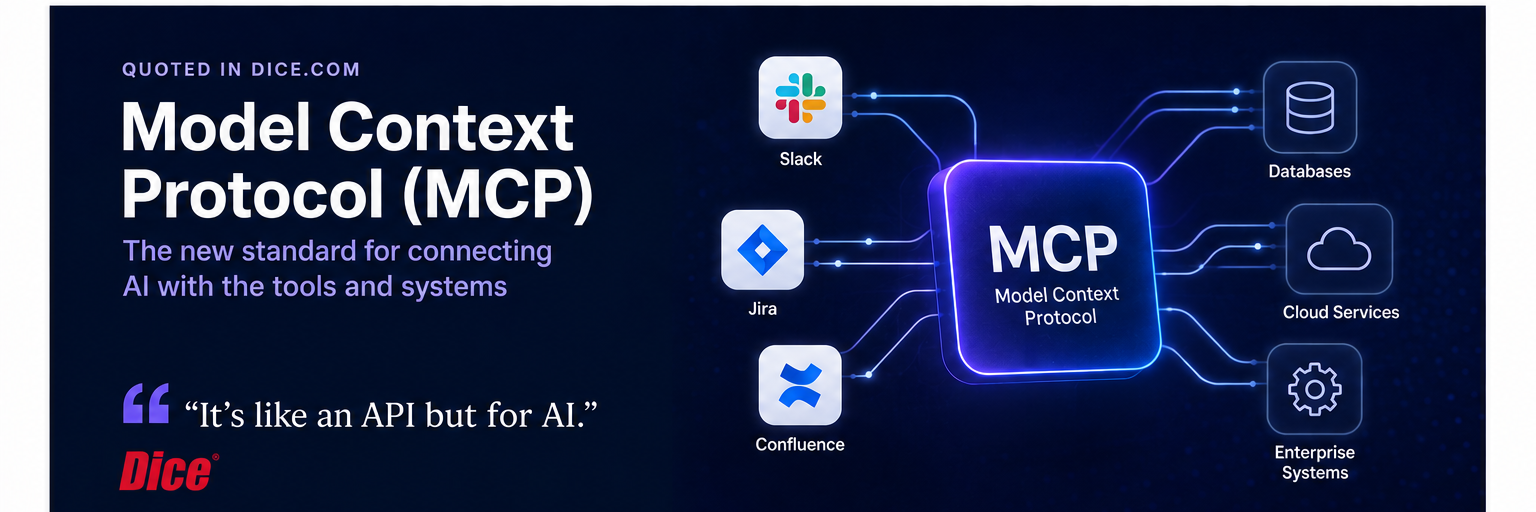
Quoted in Dice.com Article on Model Context Protocol: What Is It and How to Learn It

I recently had the pleasure of chatting with Brian Horowitz at Dice.com to share my thoughts on why MCP is a game-changer for developers and organizations alike. The article, titled “Model Context Protocol: What Is It and How to Learn It”, explores how MCP is helping transform AI systems from isolated chat experiences into connected systems that can interact with real-world tools, services, and enterprise platforms.

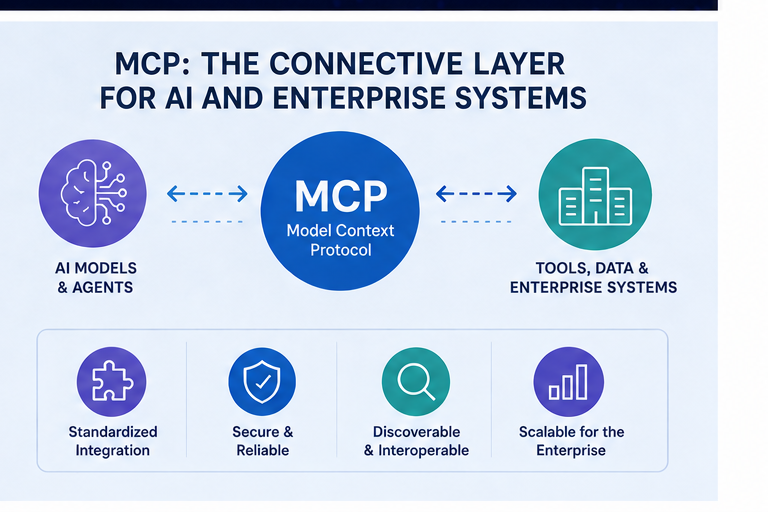
As part of the article, I shared some thoughts on how MCP is becoming the connective layer between AI agents and enterprise systems:

“It’s like an API but for AI.”

That simple comparison captures why MCP matters so much. Traditional APIs allow applications to communicate with each other. MCP extends this idea into the AI world, enabling AI systems and agents to securely connect to tools, data sources, SaaS platforms, and operational systems in a standardized way.

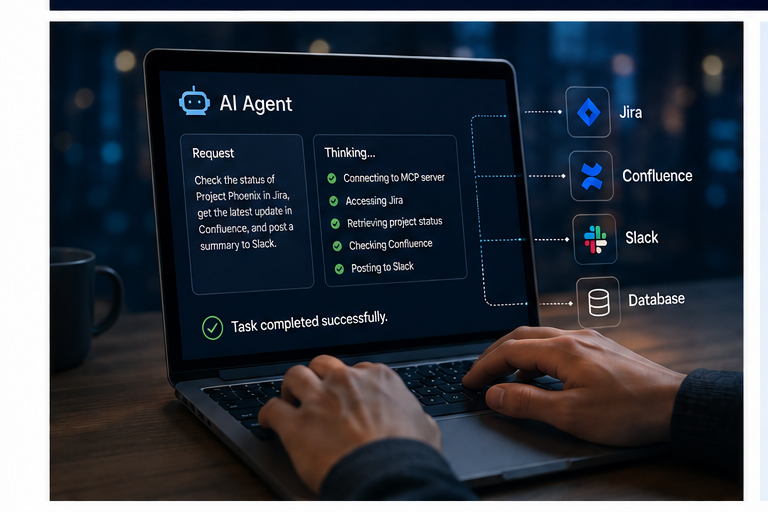
One of the examples I shared in the article was how MCP enables AI systems to interact directly with enterprise collaboration and workflow platforms.

As I explained in the interview:

“You can connect a platform like ChatGPT to a common tool like Slack. And if you connect MCP to Atlassian Suite, Jira or Confluence, you can prompt AI to perform tasks with those systems.”

This is one of the reasons MCP is generating so much excitement across the industry. Instead of AI being limited to answering questions in isolation, MCP allows AI agents to interact with the actual systems teams use every day.

Imagine prompting an AI assistant to:

  • Create or update Jira tickets
  • Pull information from Confluence documentation
  • Summarize Slack discussions
  • Generate status reports across engineering systems
  • Trigger workflows and operational tasks

That shift moves AI from being simply conversational into becoming operational.

For engineering organizations, platform teams, and enterprise IT departments, this creates major opportunities to improve productivity, automate repetitive workflows, and build smarter developer experiences across existing toolchains.

At companies operating at scale, especially those managing cloud platforms, Kubernetes environments, DevOps systems, and SaaS operations, MCP has the potential to become a foundational integration layer for enterprise AI workflows.

Why MCP Matters

One of the biggest limitations of AI systems historically has been context and actionability. AI models could generate responses, but they often struggled to interact directly with the systems where actual business work happens.

MCP changes that.

Instead of building custom integrations for every AI interaction, organizations can expose capabilities through MCP servers that AI systems can discover and use dynamically. This creates a more scalable and interoperable ecosystem for AI tooling.

In the article, I discussed examples such as:

  • Connecting AI systems to tools like Slack, Jira, and Confluence
  • Enabling AI agents to work across DevOps and IT operations workflows
  • Allowing healthcare systems to connect AI to scheduling, insurance, and EHR platforms
  • Using MCP as the “glue” between AI agents and enterprise systems

This is where things get especially exciting for cloud engineering, platform engineering, and AI infrastructure teams.

MCP and the Future of Enterprise AI

I strongly believe MCP will become foundational infrastructure for enterprise AI adoption.

As organizations move beyond isolated AI chat experiences and toward AI agents that can actually perform work, interoperability becomes critical. MCP helps provide a standard way for AI systems to securely interact with tools and data sources without requiring endless custom integrations.

We are already seeing major momentum across the industry, including adoption and support around MCP-related tooling from companies and ecosystems tied to AI platforms, developer tooling, and cloud services.

For engineering leaders, cloud teams, and developers, this is a space worth paying attention to now, not later.

How to Start Learning MCP

One of the recommendations I shared in the article was to start hands-on:

  • Experiment with MCP servers locally
  • Use tools like Docker Desktop to simplify setup
  • Explore AI agents connected to MCP-enabled systems
  • Learn foundational skills in Python and debugging tools like Visual Studio Code
  • Focus on understanding how AI agents interact with external systems

The best way to understand MCP is to build with it.

Final Thoughts

It’s an honor to be included alongside other industry voices discussing where AI infrastructure and interoperability are headed next.

We are entering a phase where AI is no longer just about prompts and chat interfaces. The next wave is about connected AI systems, AI agents, and enterprise integration at scale.

And MCP is quickly becoming one of the most important standards enabling that future.

You can read the full article here:
Model Context Protocol: What Is It and How to Learn It

Read more

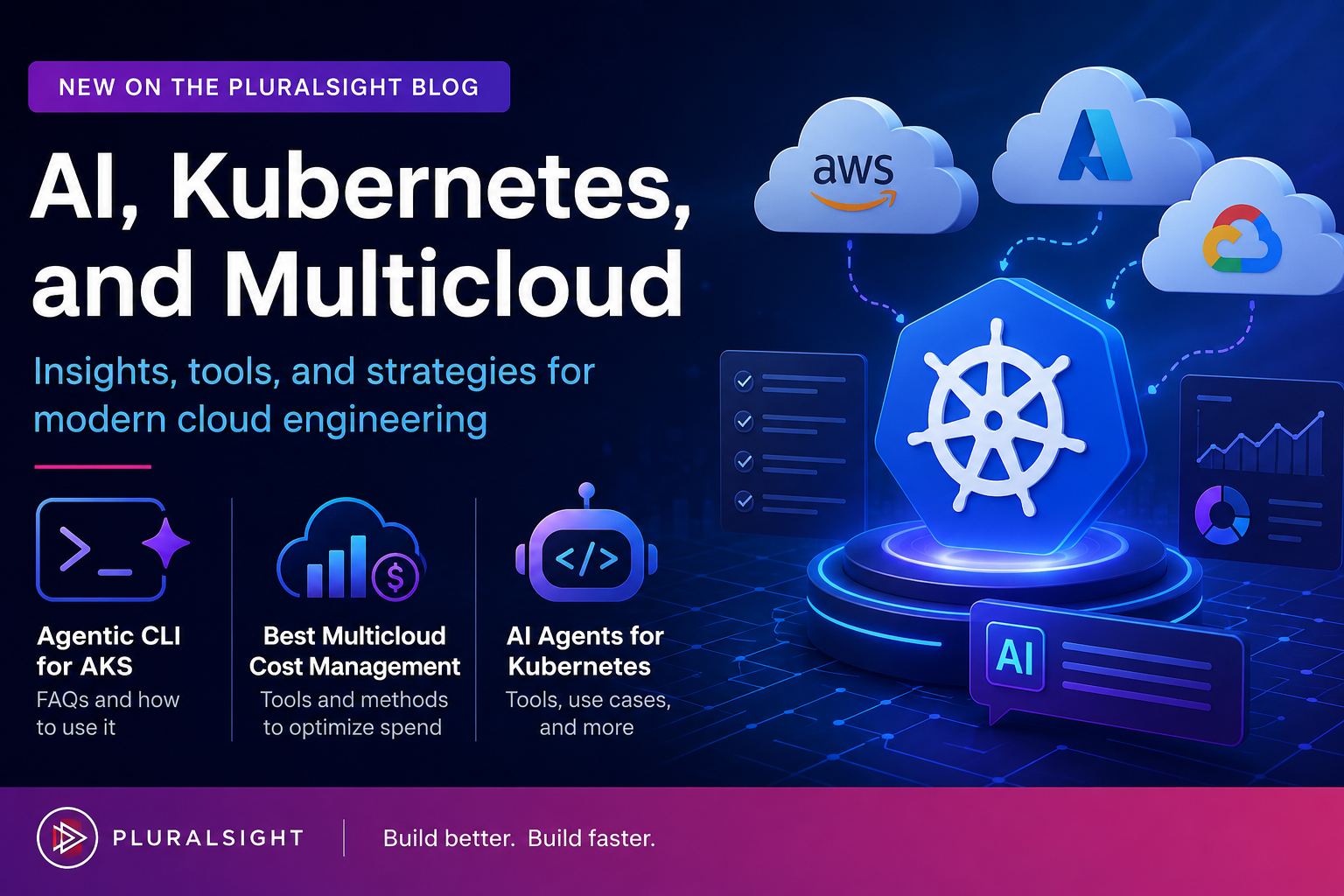
Exploring AI, Kubernetes, and Multicloud Cost Management: My Latest Pluralsight Articles

As cloud-native infrastructure, Kubernetes, AI, and multicloud strategies continue to evolve, I recently had the opportunity to publish several new articles on the Pluralsight Blog focused on some of the biggest operational and architectural trends happening right now.

These articles explore the growing role of AI in Kubernetes operations, the realities of multicloud cost management, and the rise of agentic tooling for cloud platforms.

New Blog Posts on Pluralsight.com

Agentic CLI for AKS: FAQs and how to use it

In this article, I break down Microsoft’s emerging Agentic CLI for AKS experience and explain what it actually is, how it works, and where it fits into Kubernetes operations. The post explores how the tool uses AI to assist with troubleshooting and diagnostics for Azure Kubernetes Service environments while still keeping humans in control of operational decisions.

You can read it here:

Agentic CLI for AKS: FAQs and how to use it

Best multicloud cost management tools and methods

Multicloud environments can create massive flexibility, but they also create significant operational and financial complexity. In this article, I explore practical multicloud cost management strategies, tooling approaches, and methods organizations can use to improve visibility and optimize spend across AWS, Azure, and GCP.

Read the article here:

Best multicloud cost management tools and methods

Understanding AI agents for Kubernetes

AI agents are quickly becoming one of the most interesting emerging areas in cloud-native operations. This article explores what AI agents for Kubernetes actually are, the problems they aim to solve, and some of the current tools and approaches appearing in the ecosystem. I also discuss where these systems may realistically help platform teams and where caution is still needed.

Check it out here:

Understanding AI agents for Kubernetes: Tools, use cases, and more

These topics sit at the intersection of AI, cloud engineering, Kubernetes operations, platform engineering, and FinOps, and they represent some of the biggest conversations happening across the industry right now. If you’re working in cloud-native infrastructure, platform engineering, DevOps, or AI-enabled operations, I hope these articles provide useful insight and practical perspective.

Be sure to follow my profile on Pluralsight so you will be notified as I release new courses! 

Here is the link to my Pluralsight profile to follow me:

https://www.pluralsight.com/authors/steve-buchanan

Read more

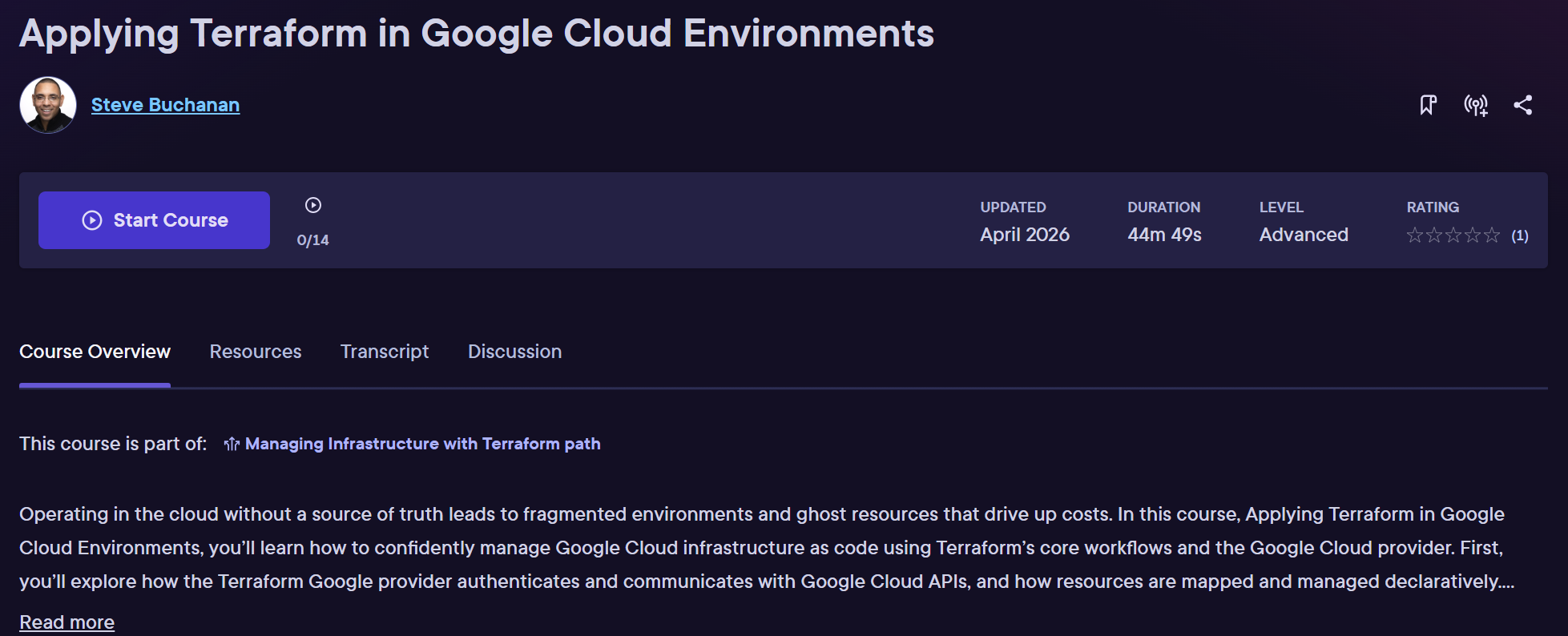
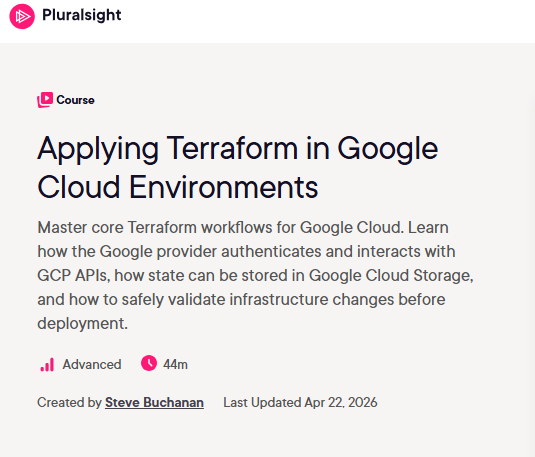
Course 31 “Applying Terraform in Google Cloud Environments” Published!

Ready to Level Up Your GCP Skills? My New Terraform Course Is Live. I’m excited to share that my latest Pluralsight course, Google Cloud Environments: Applying Terraform, is now live!

Infrastructure as Code (IaC) has become a foundational skill for modern cloud engineering teams, and Terraform continues to be one of the most widely adopted tools for managing cloud infrastructure consistently and at scale. In this course, I focus on how to apply Terraform effectively within Google Cloud environments to help engineers move beyond basic concepts and into practical, real-world implementation patterns.

Whether you’re a cloud engineer, DevOps engineer, platform engineer, or someone expanding into Google Cloud, this course is designed to help you build confidence working with Terraform in GCP environments.

What You’ll Learn

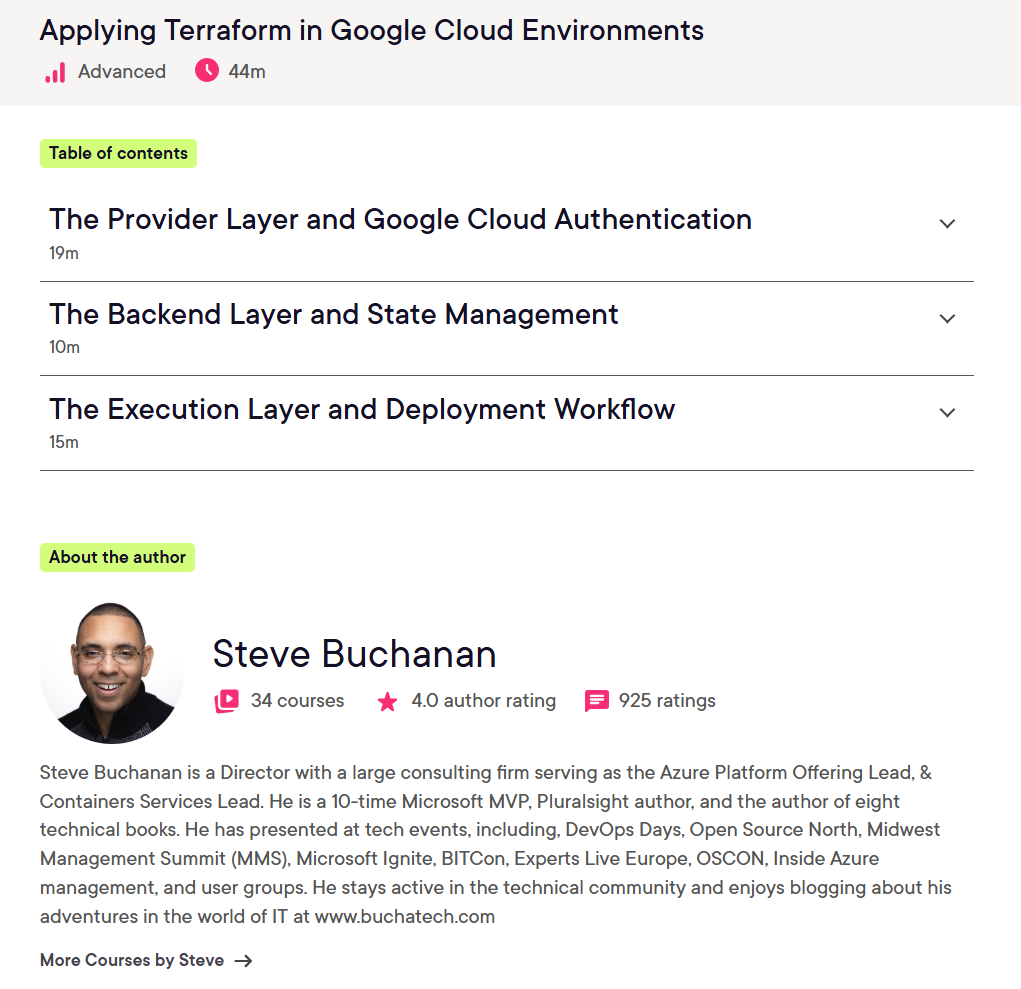
In this course, we walk through how Terraform can be used to deploy and manage infrastructure in Google Cloud using Infrastructure as Code principles. Topics include:

  • Understanding Terraform workflows in Google Cloud
  • Configuring providers and authentication
  • Managing infrastructure declaratively
  • Working with state management
  • Deploying and updating cloud resources
  • Using reusable Terraform configurations and modules
  • Applying Terraform concepts to real Google Cloud scenarios

The course is designed to help bridge the gap between learning Terraform syntax and actually applying it in cloud engineering environments.

Why Terraform Matters

Terraform enables teams to define infrastructure in code, making deployments more repeatable, scalable, and reliable. Instead of manually configuring cloud resources through portals and scripts, teams can standardize infrastructure deployments and treat infrastructure similarly to application code.

As organizations continue adopting cloud-native and multi-cloud strategies, Infrastructure as Code skills are becoming increasingly valuable across engineering and operations teams.

Hands-On Cloud Engineering Skills

One thing I always try to emphasize in technical training is practical application. The goal is not just to understand Terraform conceptually, but to understand how engineers actually use it in day-to-day cloud operations and platform engineering work.

Google Cloud and Terraform together create a powerful combination for:

  • Automated infrastructure deployments
  • Consistent environment management
  • Scalable cloud operations
  • DevOps and platform engineering workflows
  • Repeatable infrastructure provisioning

Pluralsight also provides broader Terraform and cloud engineering learning paths that complement these skills with additional hands-on labs and cloud-focused training.

Who This Course Is For

This course is a great fit for:

  • Cloud engineers
  • DevOps engineers
  • Platform engineers
  • SREs
  • IT professionals transitioning into cloud engineering
  • Anyone looking to strengthen their Terraform and Google Cloud skills

If you already have some familiarity with cloud concepts and want to deepen your Infrastructure as Code knowledge in GCP, this course should provide a solid next step.

Check It Out

You can view the course here: Google Cloud Environments: Applying Terraform on Pluralsight

I hope this course serves as a valuable resource in your IaC journey. Thank you for your continued support, and Be sure to follow my profile on Pluralsight so you will be notified as I release new courses! 

Here is the link to my Pluralsight profile to follow me:

https://www.pluralsight.com/authors/steve-buchanan

Read more