
As many of you know, I was honored to be named a Docker Captain earlier this year (2025). This week, I had the incredible opportunity to attend my very first Docker Captain Summit, and what an experience it was.
The event reminded me a bit of the Microsoft MVP Summit, but with even closer access to the Docker product teams across multiple areas. Every year, the Captain Summit takes place in a different location, bringing together Docker staff from product groups, community management, marketing, and DevRel, along with fellow Docker Captains from around the world.
At the summit, we got an inside look at Docker’s roadmap and were among the first to learn about upcoming products and initiatives. We also had the opportunity to provide direct feedback to the product teams, helping shape the future of Docker from the community’s perspective.
This year’s summit was held in Istanbul, and it was a fantastic few days of connecting with so many brilliant people. I finally met in person several Docker staff members and Captains I’ve been collaborating with online. It was also a chance to reunite with friends from Microsoft and the MVP community.
Of course, not everything we discussed can be shared publicly because of NDAs, but I can tell you that we all walked away with some exciting insights and some awesome Docker swag.
🎤 I’m excited to share that I’ll be returning to BITCON in a week! I will be speaking at BITCON 2025, a gathering focused on Black voices in technology, innovation, and community. You can check out the full speaker lineup here: BITCON 2025 Speakers. The conference this year is virtual and its free. You can check out the site here: https://bitcon.blacksintechnology.net
The conference has a ton of great speakers lined up from some of the largest tech companies such as Google, Microsoft, and more. And to top it off the keynote this year is Kelsey Hightower! You dont want to miss this one.
My Session: “The Easiest Way to Run LLMs Locally: Meet Docker Model Runner”
Docker Captain: Steve Buchanan DMR session
At BITCON, I’ll be presenting “The Easiest Way to Run LLMs Locally: Meet Docker Model Runner”. In this session, I’ll look at:
Why run LLMs locally? The benefits in terms of cost, privacy, latency, and control
How Docker Model Runner simplifies things — containerizing large models, managing dependencies, and lowering friction
Demo and walkthrough — showing you step by step how to get a model up and running on your own machine or server
Best practices, pitfalls, and tips — what I’ve learned building and deploying these systems
Q&A / hands-on help — to get you started with your own setup
My goal is that attendees leave with a concrete, reproducible process they can apply right away.
Why It Matters
Large language models (LLMs) are powerful, but running them locally has often felt out of reach for smaller teams, indie devs, or people in resource-constrained environments. With the right tooling (like Docker Model Runner), we can lower that barrier—unlocking more experimentation, more privacy, and more control over where and how inference happens.
I believe this aligns well with the mission of BITCON: elevating voices, demystifying advanced tech, and making it accessible. I hope this talk helps bridge a gap for folks who want to explore AI locally without getting lost in infrastructure.
I am excited to be speaking at BITCON again. To learn more about my session check it out here:
I’ve been spending a lot of time blogging on Pluralsight lately, and one of my recent posts covered a topic I’m genuinely excited about: running large language models (LLMs) locally. Specifically, I explored a tool called Docker Model Runner that makes this process more accessible for developers.
In the post, I broke down a few key ideas.
Why Run an LLM Locally
There’s a lot of momentum around cloud-hosted AI services, but running models locally still has its place. For many developers it means more control, quicker experimentation, and the ability to work outside of a cloud provider’s ecosystem.
Tools in This Space
Before zeroing in on Docker Model Runner, I broke down other ways developers are running models locally. The landscape is quickly evolving, and each tool has trade-offs in terms of usability, performance, and compatibility with different models.
Why Docker Model Runner
What really stood out to me with Docker Model Runner is how it lowers the barrier to entry. Instead of wrestling with environment setup, dependencies, and GPU drivers, you can pull down a container and get straight to experimenting. It leans into Docker’s strengths of portability and consistency, so whether you’re on a desktop, laptop, or even testing in a lab environment, the experience is smooth and repeatable.
For developers who are curious about LLMs but don’t want to get bogged down in infrastructure, this tool is a great starting point.
I’m excited to share that my first official blog post as a Docker Captain has been published on the Docker blog! It’s an honor to contribute to a platform that’s been so foundational in shaping how we build, ship, and run applications today. This first piece dives into Ask Gordon, Docker’s new AI assistant that helps developers go from source code to a running container with less friction and guesswork.
In the post, I walk through how Ask Gordon makes it easier to containerize your applications, even if you’ve never written a Dockerfile before. By analyzing your source code and asking a few smart questions, Ask Gordon generates everything you need to build and run your app in a containerized environment. It’s good for beginners getting started with containers and equally valuable for experienced devs looking to speed up repetitive setup tasks.
One of the things I appreciated most about Ask Gordon is how it bridges the gap between the developer’s intent and the actual container configuration. Rather than copy-pasting snippets from docs or Stack Overflow, the AI gives you context-aware Dockerfiles, Compose files, and clear next steps for your app. It’s a great example of how AI can elevate the developer experience without overcomplicating things.
This is just the beginning of my journey as a Docker Captain, and I’m looking forward to sharing more tutorials, insights, and real-world use cases that can help developers simplify their container workflows. If you haven’t checked it out yet, give my new post a read here: 👉 Containerize Your Apps with Ask Gordon
A big thanks to the Docker team for the warm welcome and opportunity!
For those unfamiliar, Docker Captains are a group of handpicked technology leaders who are passionate about Docker and the broader container ecosystem. The program highlights community members who are not only technically sharp but also deeply committed to sharing their knowledge and supporting others in the community. I am honored to join this community of 163 captains globally and 34 in the US. This award is similar to the Microsoft MVP award. The award is annually based.
Being named a Docker Captain is a huge honor. This recognition means a lot to me especially because it’s not just about what you know, but how give back to the community and share with others. Whether it’s speaking at conferences, creating tutorials, helping others get started, or experimenting with the latest container tools, it’s about lifting the community up together!
What This Means
As a Docker Captain, I’ll have access to:
Private product briefings with Docker engineers and insiders.
Early previews of tools, templates, and content.
A private Slack group with other Captains around the world.
The opportunity to share what I create with a wider audience through Docker’s channels.
A chance to meet the Docker product groups and other Captains once a year.
And of course… exclusive Docker swag 😎.
They already sent some cool swag in the welcome package:
But above all, it’s about continuing to give back. I’ve always believed in sharing what I know and helping others level up in tech, and this just fuels that mission even more.
What’s Next
I’ll be using my blog and other platforms to
Publish more Docker and container content here.
Share real world use cases from the trenches.
Highlight new and lesser known tools in the Docker ecosystem (like Ask Gordon/Docker AI, which I recently blogged about).
Collaborate with the global Captain crew on exciting community initiatives.
Stay tuned for more. And if you’re just starting your Docker journey, or deep into production workloads, I’d love to hear from you. Let’s connect, collaborate, and continue building awesome things, one container at a time.
A special shout out to Shelley Benhoff and Eva Bojorges for helping with this with award and opportunity! Also thanks to Docker for the warm welcome and to everyone in the community who’s been part of this journey so far. 🚢
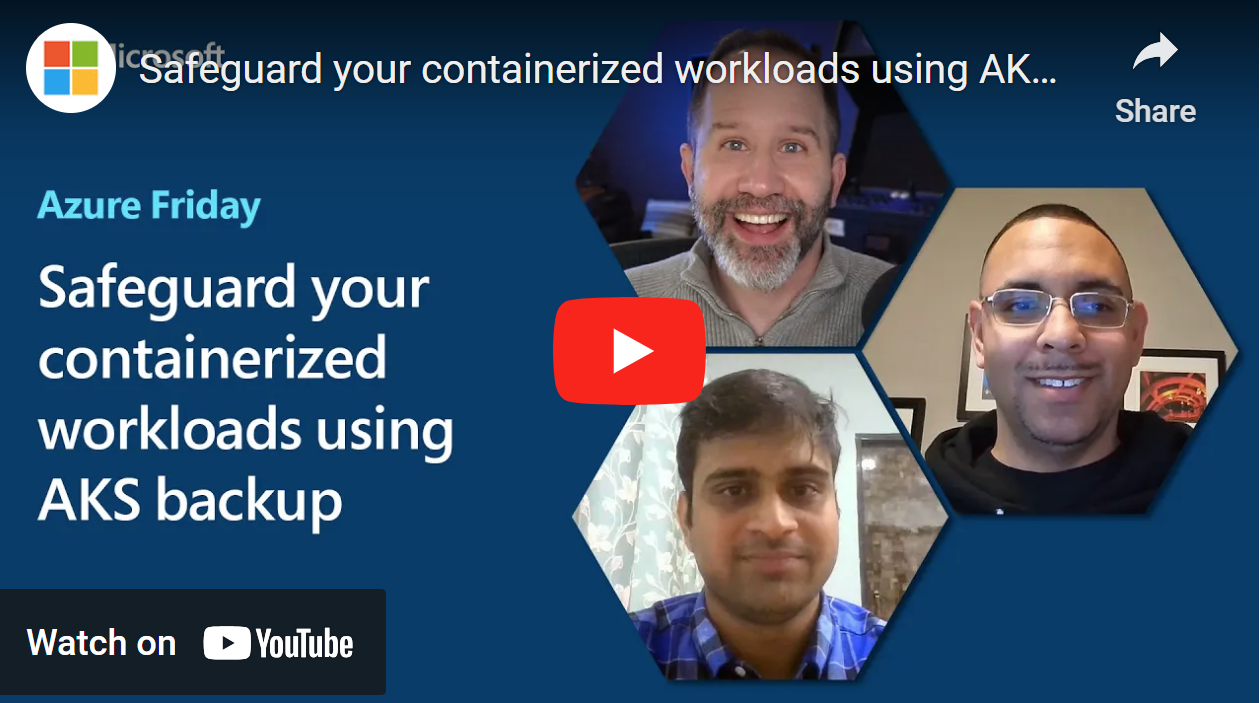
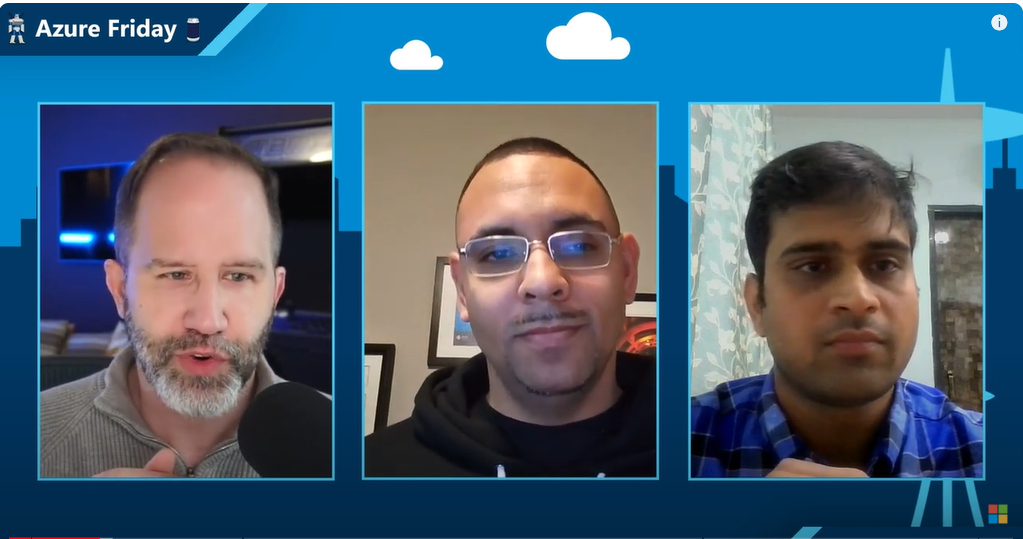
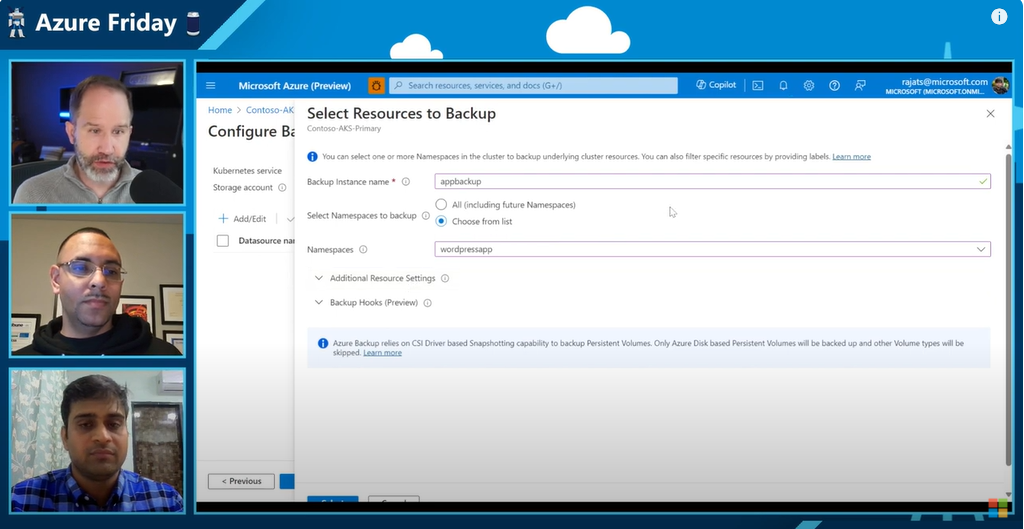
I am happy to share a new episode of Azure Friday. It was an honor to appear along side Senior Product Manager Rajat Shrivastava in this episode to talk about AKS Backup. I this episode we joined Scott Hanselman to explore the functionality of AKS backup in safeguarding containerized apps and their data on AKS.
Backup is frequently overlooked, only gaining significance when a failure necessitates recovery. In the realm of Containers and Kubernetes, it is often perceived as unnecessary. However, the reality is that backups are essential even for containerized environments. Microsoft has introduced a backup solution for Azure Kubernetes Service (AKS) and its workloads, leveraging Azure Backup.
In this episode we dove into the importance of backing up containers, even when they are predominantly stateless. The episode sheds light on why safeguarding containers is crucial and provides insights into the workings of AKS backup in ensuring the protection of workloads running on AKS.
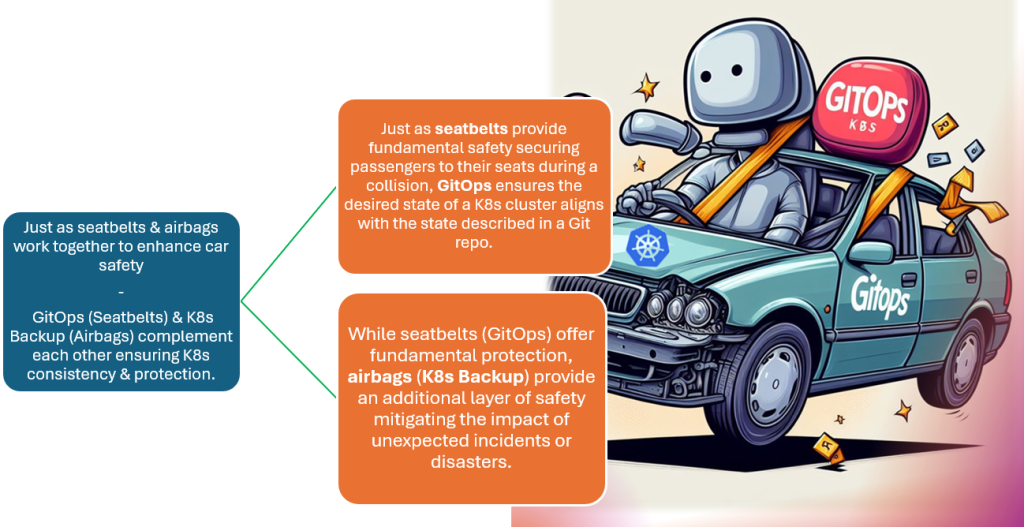
In the episode we also explore questions you may have about backing up K8s and we dive into demos showing how to protect AKS with AKS backup and how to do a restore. We even took time to answer this common question “Do I really need to backup my K8s cluster if I am running stateless apps & have everything in code i.e. IaC, CI/CD, or GitOps?”. The answer is yes. In fact one should think of it this way: “GitOps & K8s Backup are like Seatbelts & Airbags”. Here is a graphic to break this down further:
I am excited to be on another panel for the Come Cloud With Us folks!
This time this panel is focused on Platform Engineering. It will be at the end of February. You wont want to miss this panel! Here is more info about the panel:
When:
Thursday, February 29, 2024 at 4:00 PM to 5:30 PM CST
Where:
Online event
ThePanel: Steve Buchanan – Principal Program Manager at Microsoft Kaslin Fields – Developer Advocate at Google Marino Wijay – Cloud Native Solutions Engineering and Advocacy at Solo Michael Levan – Chief Engineer/Consultant, Content Creator, and Trainer Saim Safdar – Technical Leader and CNCF Ambassador Kat Morgan – Developer Advocate at Pulumi Whitney Lee – Staff Technical Advocate at VMware Robin Smorenburg – Lead Cloud Architect – Azure MVP & CNCF Ambassador
What to Expect: A comprehensive exploration of Kubernetes, including architecture, best practices, practical demonstrations of AKS deployment and management, insights into optimizing containerized applications, and valuable networking opportunities with industry professionals.
Who should attend: Whether you’re a developer, IT professional, Azure enthusiast, student, or learner, this event is designed for you.
Mark your calendars and RSVP now! See you there! 🚀
For a while, I have been hearing chatter around “What is Microsoft doing in the Platform Engineering space?” and “What is Microsoft’s stance on Platform Engineering?”. Well, today is the first day of Microsoft Ignite 2024 and I am happy to say Microsoft has officially released a Platform engineering guide. It can be found here: https://aka.ms/plat-eng-learn
It is broken down into the following sections: Overview, Concept, How-To Guide, and Architecture!
Working through this guide will help you discover how platform engineering teams can leverage technologies from Microsoft and other vendors/providers to craft highly personalized, optimized, and secure developer experiences.
This guide essentially gives you the scoop on Microsoft’s perspective when it comes to Platform Engineering. It can be used to help you along your Platform Engineering journey!
Shout out to the core team that built this! DevDiv: Mark Weitzel, Chuck Lantz, Russell Conard and AKS Engineering: Daniel Sol.
Another cool thing launched today is Microsoft’s Platform Engineering Interest Group.
At Microsoft, we want to hear about your challenges with Platform Engineering and provide opportunities to connect with other teams, at Microsoft and at other companies, who are working together to build solutions in the Platform Engineering space. Joining this group will let you get exclusive early access to new tools and services from Microsoft. Sign up here:
The last thing I want to mention in this post is a new open-source product from Microsoft named Radius. Radius is a single tool to describe, deploy, and manage your entire application. Radius is dedicated to addressing the platform engineering challenges associated with facilitating application deployments across on-premises infrastructure and major cloud providers such as Microsoft Azure and Amazon Web Services.
Radius is not an IDP. It’s an optional part of an IDP focused on the applications that provides infrastructure Recipes, simplifying the platform configurations like permissions, connection strings, and more to manage the application and its resources.
Radius empowers developers to comprehend their applications, recognizing that an application extends beyond Kubernetes alone. Radius assists developers in visualizing all the components that form their application. More about Radius here: radapp.io
I’m very excited to announce something that has been in the works for a little while now. I was fortunate to interview the legendary Andrew Shafer (@littleidea). We had a discussion about Platform Engineering. If you don’t know Andrew here is his BIO:
“Andrew Clay Shafer helped create the tools and practices that made DevOps a word. He is fascinated with the dynamics of high-performing individuals and organizations and has a reputation for improving outcomes at the intersection of Open Source, Cloud Computing and Software Delivery working on Puppet, OpenStack, Cloud Foundry and Kubernetes before founding Ergonautic to focus on improving the way people work.“
Basically, he started this whole DevOps thing, was key in the DevOps Days events, has founded some high-profile companies, and more. He is the perfect person to chat with about Platform Engineering because if anyone knows it he does!
I chatted with Andrew in an episode of Pluralsight’s Expert Access. Expert Access is a YouTube series where we (Pluralsight authors) bring in some of the best minds in tech to hear how tech leaders are solving business challenges and their takes on what’s next.
The title of the episode is: “Pluralsight Expert Access: Andrew Shafer on platform engineering as an evolution, not a replacement“. In this episode, I interview Andrew, as he gives his take on what Platform Engineering is, what organizations are chasing to enable developers, and what’s keeping organizations from long-term success when it comes to their DevOps practices. In the discussion we tackle these questions and more:
Is Platform Engineering a result of failed DevOps efforts in organizations? Is it just a Service Catalog with the twist of it being geared towards devs?
Platforms are not a new concept in the software world. In one of your tweets, there is an interesting line “Continuous Delivery without a platform is malpractice.“ Is this highlighting that organizations have been doing DevOps without platforms? Can you break down this line for us? It seems like there may be a story behind this?
Some people may equate Platform Engineering to having an Internal Developer Platform, is this the core of PE or are there other technologies that are also core to it?
Watch the episode for more insights on the importance of changing practices–not just words–for achieving sustainable progress and seeing Platform Engineering as a holistic approach to DevOps and delivery.