I am excited to share that I will be speaking at this year’s Open Source North conference on May 29, 2025, at the University of St. Thomas in St. Paul.
This year, I’m teaming up with my fellow Jamf, Levi McCormick (Director of Engineering at Jamf), for a session that is very close to our daily reality: Multi-Cloud Without the Marketing or Designing for Multi-Cloud Without Losing Your Mind.
Why this talk? In the cloud industry, “Multi-Cloud”, “Cloud Native”, and “Iac via Terraform” are often sold as magic pills for redundancy, cost savings, unifaction and more across clouds. But for the people actually building and maintaining these systems, it can often feel like a recipe for complexity and technical debt.
At Jamf, Levi and I work on our infrastructure efforts across AWS, Azure, and GCP. We’ve learned—sometimes the hard way—what works, what doesn’t, and where the “hype” version of cloud differs from the “production” version. We wanted to build a session that focuses on the practical:
How to design for portability without over-engineering.
Managing identity, networking, and security across different providers.
Avoiding the “lowest common denominator” trap.
Keeping your sanity while managing three different clouds.
Open Source North is a great local event to the MN Tech scene because of the high-caliber community and the focus on real-world engineering. Whether you are a cloud veteran or just starting to look at a second provider, we’d love to see you there.
The Details:
Conference: Open Source North 2025
Date: May 29, 2025
Location: University of St. Thomas (St. Paul Campus)
As many of you know, I was honored to be named a Docker Captain earlier this year (2025). This week, I had the incredible opportunity to attend my very first Docker Captain Summit, and what an experience it was.
The event reminded me a bit of the Microsoft MVP Summit, but with even closer access to the Docker product teams across multiple areas. Every year, the Captain Summit takes place in a different location, bringing together Docker staff from product groups, community management, marketing, and DevRel, along with fellow Docker Captains from around the world.
At the summit, we got an inside look at Docker’s roadmap and were among the first to learn about upcoming products and initiatives. We also had the opportunity to provide direct feedback to the product teams, helping shape the future of Docker from the community’s perspective.
This year’s summit was held in Istanbul, and it was a fantastic few days of connecting with so many brilliant people. I finally met in person several Docker staff members and Captains I’ve been collaborating with online. It was also a chance to reunite with friends from Microsoft and the MVP community.
Of course, not everything we discussed can be shared publicly because of NDAs, but I can tell you that we all walked away with some exciting insights and some awesome Docker swag.
I’m excited to announce the release of my 28th Pluralsight course, and it’s a timely one as its about a topic that’s becoming more important by the day: Agentic AI Safety and Alignment.
As AI agent adoption accelerates, developers and product teams are under increasing pressure to ensure these systems behave responsibly. It’s no longer enough to build capable AI agents, they must also operate safely, ethically, and in alignment with your organization’s values.
That’s exactly what this course is about.
🧠 Why This Course Matters
The rise of autonomous AI agents brings incredible potential. but also significant risk. From runaway costs to prompt injection attacks, the stakes are high. In this course, I cover:
Prevent unintended behaviors
Embed ethics and safety checks into agents
Guard against issues like prompt injection
Keep human oversight (human in the loop)
Avoid unexpected bills or policy violations
To balance the theory and practice, I run through some demos using Microsoft Co-Pilot Studio and Flowise. You’ll see how to put in safety checks, define agent constraints, implement value alignment, and put in controls that keep your agentic AI safe.
📘 Official Course Description
“As companies rapidly adopt autonomous AI agents, developers and product leads face growing pressure to ensure these systems operate safely and align with organizational values. In this course, Agentic AI Safety and Alignment, you’ll gain the ability to design and deploy agentic AI systems that are both effective and ethically sound. First, you’ll explore how to identify potential risks and prevent unintended behaviors in autonomous agents. Next, you’ll discover how to embed your organization’s values by integrating rules and safety checks into your agent design. Finally, you’ll learn how to apply guardrails that keep agents aligned and under control. When you’re finished with this course, you’ll have the skills and knowledge needed to build AI agents that operate responsibly and stay true to your company’s principles.”
If you’re building, leading, or managing AI agent systems, this course will help you. Check out the course here:
I hope this course serves as a valuable resource in your AI journey. Thank you for your continued support, and Be sure to follow my profile on Pluralsight so you will be notified as I release new courses!
Here is the link to my Pluralsight profile to follow me:
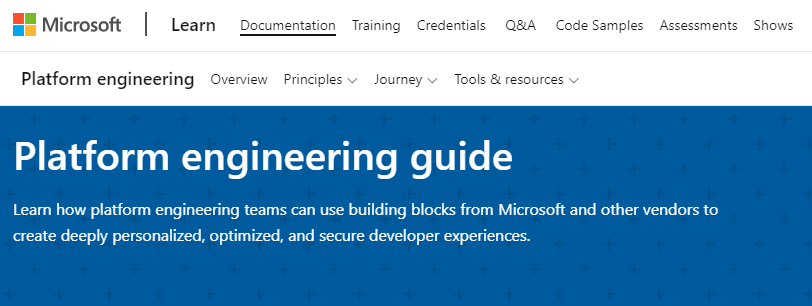
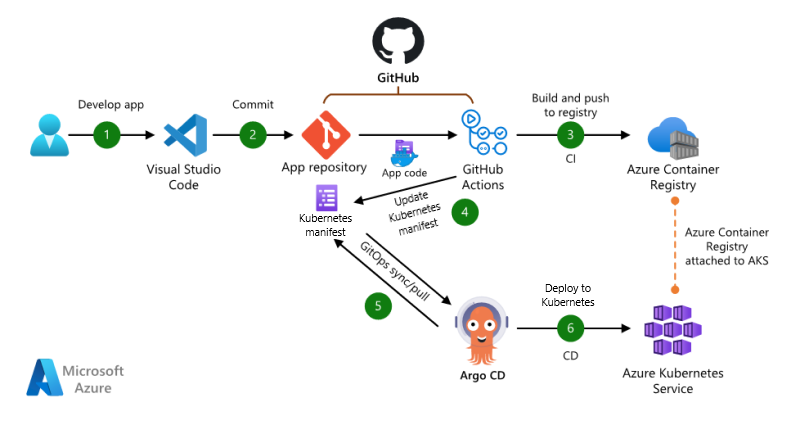
For a while, I have been hearing chatter around “What is Microsoft doing in the Platform Engineering space?” and “What is Microsoft’s stance on Platform Engineering?”. Well, today is the first day of Microsoft Ignite 2024 and I am happy to say Microsoft has officially released a Platform engineering guide. It can be found here: https://aka.ms/plat-eng-learn
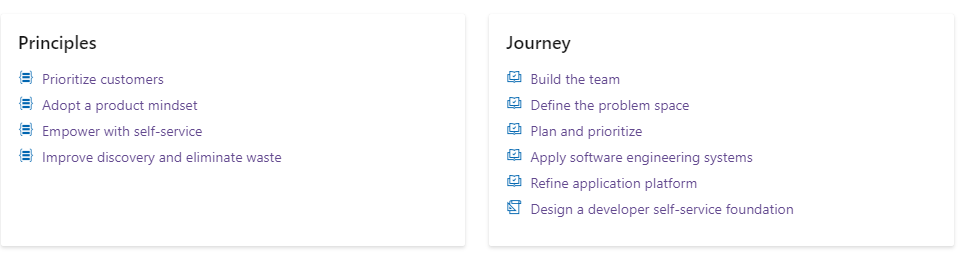
It is broken down into the following sections: Overview, Concept, How-To Guide, and Architecture!
Working through this guide will help you discover how platform engineering teams can leverage technologies from Microsoft and other vendors/providers to craft highly personalized, optimized, and secure developer experiences.
This guide essentially gives you the scoop on Microsoft’s perspective when it comes to Platform Engineering. It can be used to help you along your Platform Engineering journey!
Shout out to the core team that built this! DevDiv: Mark Weitzel, Chuck Lantz, Russell Conard and AKS Engineering: Daniel Sol.
Another cool thing launched today is Microsoft’s Platform Engineering Interest Group.
At Microsoft, we want to hear about your challenges with Platform Engineering and provide opportunities to connect with other teams, at Microsoft and at other companies, who are working together to build solutions in the Platform Engineering space. Joining this group will let you get exclusive early access to new tools and services from Microsoft. Sign up here:
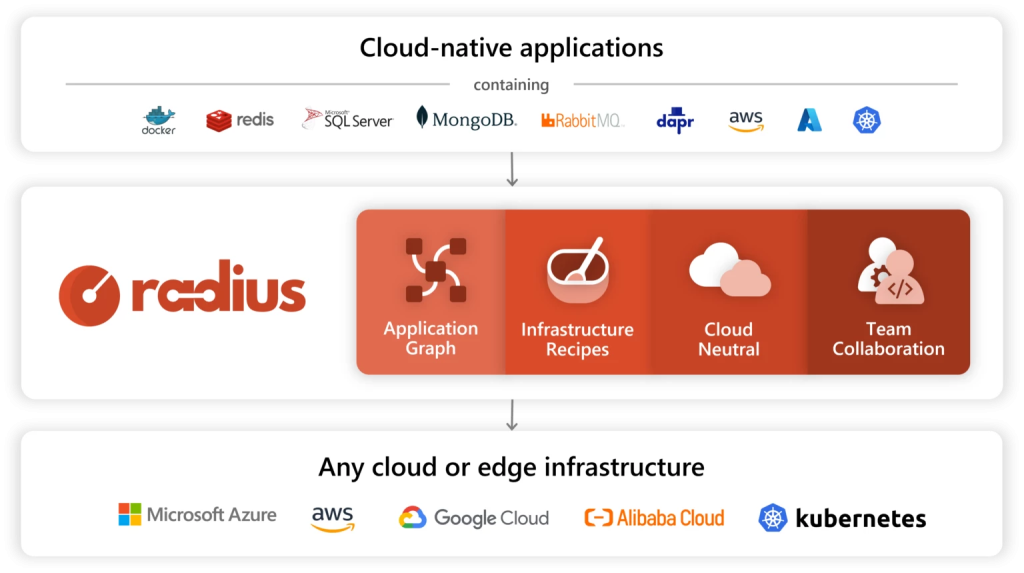
The last thing I want to mention in this post is a new open-source product from Microsoft named Radius. Radius is a single tool to describe, deploy, and manage your entire application. Radius is dedicated to addressing the platform engineering challenges associated with facilitating application deployments across on-premises infrastructure and major cloud providers such as Microsoft Azure and Amazon Web Services.
Radius is not an IDP. It’s an optional part of an IDP focused on the applications that provides infrastructure Recipes, simplifying the platform configurations like permissions, connection strings, and more to manage the application and its resources.
Radius empowers developers to comprehend their applications, recognizing that an application extends beyond Kubernetes alone. Radius assists developers in visualizing all the components that form their application. More about Radius here: radapp.io