
Expert Meetup at Microsoft Build 2026

The energy around Microsoft Build is always unmatched, but this year’s event holds a special place for me. I am excited to share that I will be attending Microsoft Build 2026 for the first time not just as an attendee, but as one of the Microsoft Experts in the Expert Meetup!
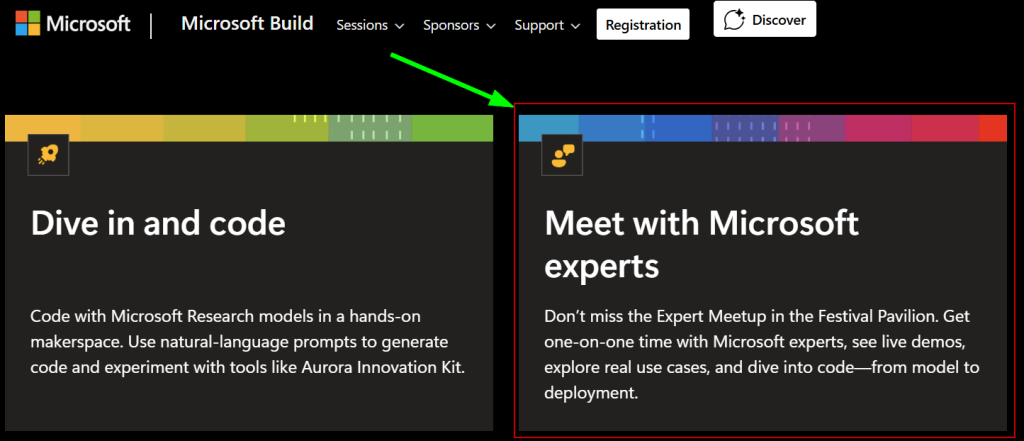
If you are heading to San Francisco, you can find me and a fantastic group of Microsoft Full-Time Employees (FTEs) and fellow Microsoft MVPs over in the Festival Pavilion. This dedicated area is designed for deep dives, unfiltered technical discussions, and collaborative problem-solving.

What is the Expert Meetup?

The Expert Meetup is all about direct, one-on-one connection. It’s a space where you can get dedicated time with folks who live and breathe this technology every day. Whether you want to see live demos, explore highly specific real-world use cases, or literally dive into code from foundational models all the way to production deployment this is where it happens.

My Focus Areas: Cloud Native, Open Source, and Beyond

While the entire expert area spans an incredible lineup of modern technology domains including Azure Application Services, AI-Ready Infrastructure, Governance & Compliance, and Agentic Modernization but my primary focus will be centered on Cloud Native architectures.

I’ll be on hand to chat about everything from Kubernetes, Azure Kubernetes Service, and container strategies to microservices scaling and the modern developer expericience. Additionally, we can talk about the following technical areas including:

  • Cloud Native & Open Source: Integrating OSS tooling seamlessly into your enterprise ecosystem.
  • Artificial Intelligence: Bridging the gap between cloud-native infrastructure and AI-ready workloads.
  • General Azure Architecture: Best practices, optimization strategies, and landing zone foundations.

Let’s Connect

Events like Build are fundamentally about the community. If you are a former Microsoft colleague, a fellow Microsoft MVP, a GitHub Star, an enterprise developer, or an cloud/cloud native enthusiast lets connect! Stop by the Festival Pavilion, grab me for a coffee, or ping me ahead of time so we can sync up.

Let’s talk code, AI, Cloud Native share what we are building, and figure out how to solve your toughest engineering challenges together. See you in the Festival Pavilion!
Read more

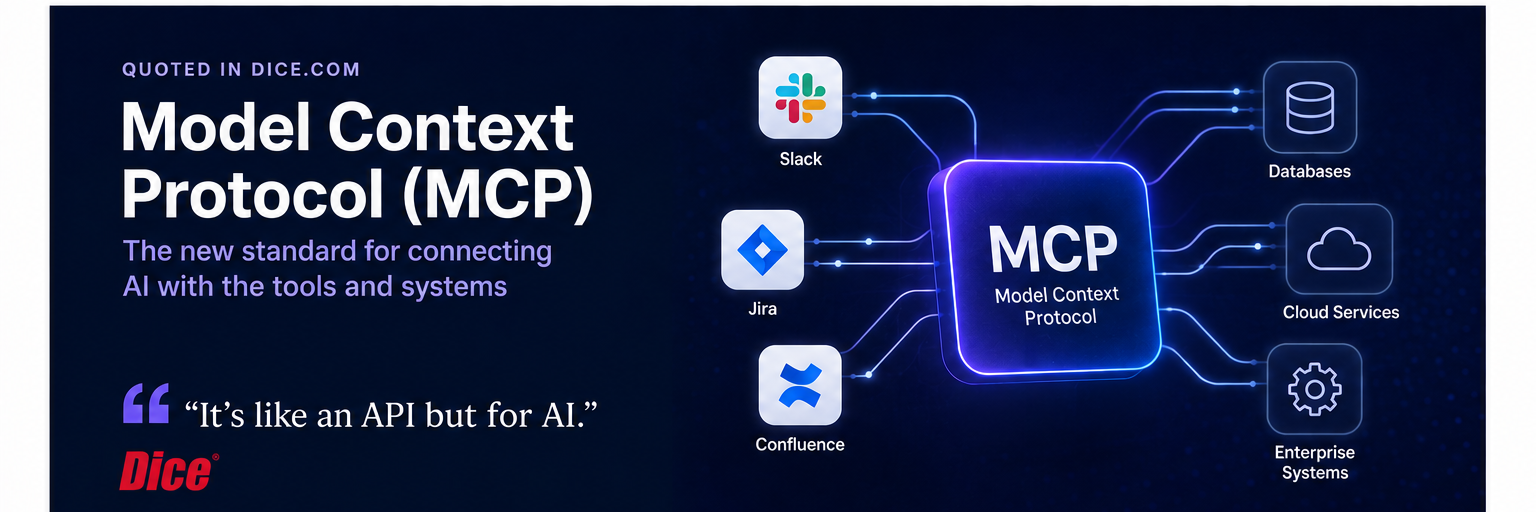
Quoted in Dice.com Article on Model Context Protocol: What Is It and How to Learn It

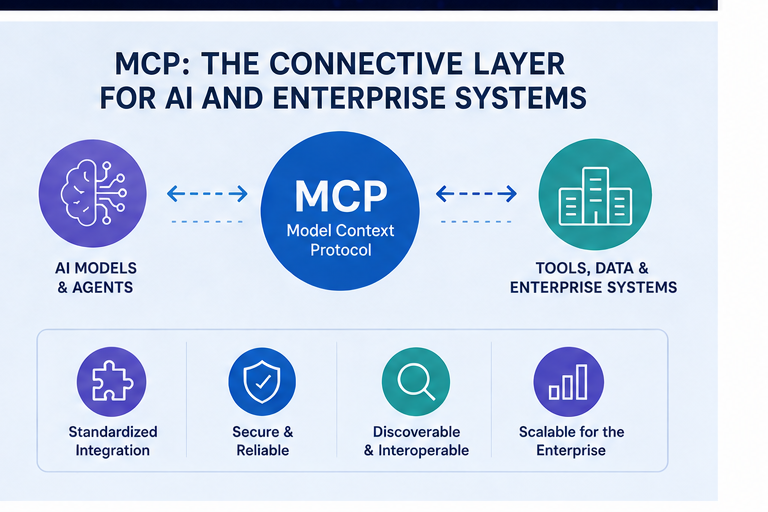
I recently had the pleasure of chatting with Brian Horowitz at Dice.com to share my thoughts on why MCP is a game-changer for developers and organizations alike. The article, titled “Model Context Protocol: What Is It and How to Learn It”, explores how MCP is helping transform AI systems from isolated chat experiences into connected systems that can interact with real-world tools, services, and enterprise platforms.

As part of the article, I shared some thoughts on how MCP is becoming the connective layer between AI agents and enterprise systems:

“It’s like an API but for AI.”

That simple comparison captures why MCP matters so much. Traditional APIs allow applications to communicate with each other. MCP extends this idea into the AI world, enabling AI systems and agents to securely connect to tools, data sources, SaaS platforms, and operational systems in a standardized way.

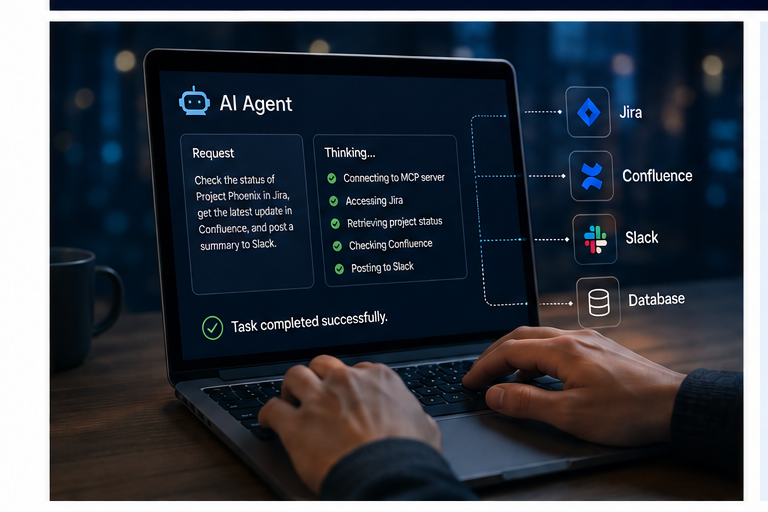
One of the examples I shared in the article was how MCP enables AI systems to interact directly with enterprise collaboration and workflow platforms.

As I explained in the interview:

“You can connect a platform like ChatGPT to a common tool like Slack. And if you connect MCP to Atlassian Suite, Jira or Confluence, you can prompt AI to perform tasks with those systems.”

This is one of the reasons MCP is generating so much excitement across the industry. Instead of AI being limited to answering questions in isolation, MCP allows AI agents to interact with the actual systems teams use every day.

Imagine prompting an AI assistant to:

  • Create or update Jira tickets
  • Pull information from Confluence documentation
  • Summarize Slack discussions
  • Generate status reports across engineering systems
  • Trigger workflows and operational tasks

That shift moves AI from being simply conversational into becoming operational.

For engineering organizations, platform teams, and enterprise IT departments, this creates major opportunities to improve productivity, automate repetitive workflows, and build smarter developer experiences across existing toolchains.

At companies operating at scale, especially those managing cloud platforms, Kubernetes environments, DevOps systems, and SaaS operations, MCP has the potential to become a foundational integration layer for enterprise AI workflows.

Why MCP Matters

One of the biggest limitations of AI systems historically has been context and actionability. AI models could generate responses, but they often struggled to interact directly with the systems where actual business work happens.

MCP changes that.

Instead of building custom integrations for every AI interaction, organizations can expose capabilities through MCP servers that AI systems can discover and use dynamically. This creates a more scalable and interoperable ecosystem for AI tooling.

In the article, I discussed examples such as:

  • Connecting AI systems to tools like Slack, Jira, and Confluence
  • Enabling AI agents to work across DevOps and IT operations workflows
  • Allowing healthcare systems to connect AI to scheduling, insurance, and EHR platforms
  • Using MCP as the “glue” between AI agents and enterprise systems

This is where things get especially exciting for cloud engineering, platform engineering, and AI infrastructure teams.

MCP and the Future of Enterprise AI

I strongly believe MCP will become foundational infrastructure for enterprise AI adoption.

As organizations move beyond isolated AI chat experiences and toward AI agents that can actually perform work, interoperability becomes critical. MCP helps provide a standard way for AI systems to securely interact with tools and data sources without requiring endless custom integrations.

We are already seeing major momentum across the industry, including adoption and support around MCP-related tooling from companies and ecosystems tied to AI platforms, developer tooling, and cloud services.

For engineering leaders, cloud teams, and developers, this is a space worth paying attention to now, not later.

How to Start Learning MCP

One of the recommendations I shared in the article was to start hands-on:

  • Experiment with MCP servers locally
  • Use tools like Docker Desktop to simplify setup
  • Explore AI agents connected to MCP-enabled systems
  • Learn foundational skills in Python and debugging tools like Visual Studio Code
  • Focus on understanding how AI agents interact with external systems

The best way to understand MCP is to build with it.

Final Thoughts

It’s an honor to be included alongside other industry voices discussing where AI infrastructure and interoperability are headed next.

We are entering a phase where AI is no longer just about prompts and chat interfaces. The next wave is about connected AI systems, AI agents, and enterprise integration at scale.

And MCP is quickly becoming one of the most important standards enabling that future.

You can read the full article here:
Model Context Protocol: What Is It and How to Learn It

Read more

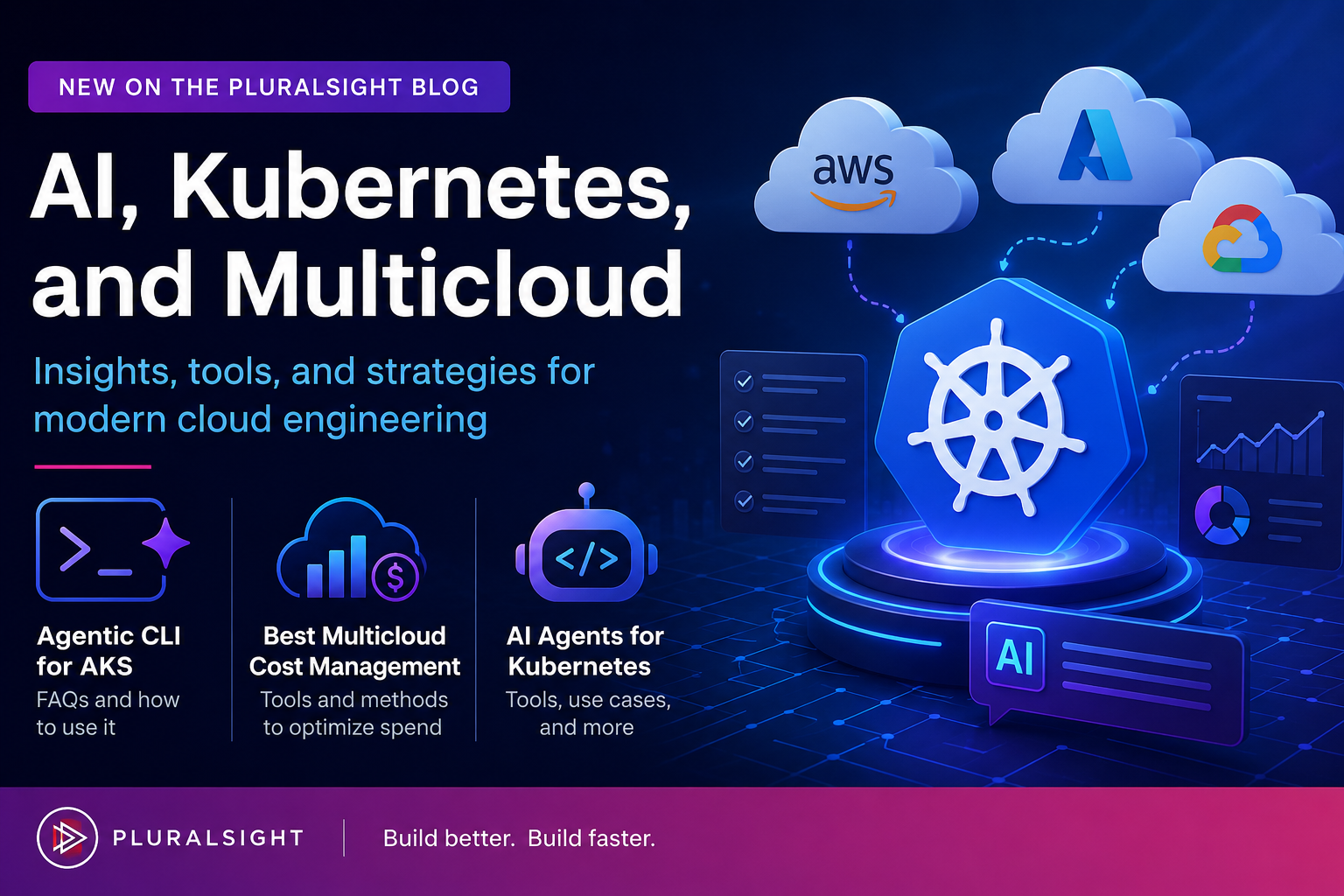
Exploring AI, Kubernetes, and Multicloud Cost Management: My Latest Pluralsight Articles

As cloud-native infrastructure, Kubernetes, AI, and multicloud strategies continue to evolve, I recently had the opportunity to publish several new articles on the Pluralsight Blog focused on some of the biggest operational and architectural trends happening right now.

These articles explore the growing role of AI in Kubernetes operations, the realities of multicloud cost management, and the rise of agentic tooling for cloud platforms.

New Blog Posts on Pluralsight.com

Agentic CLI for AKS: FAQs and how to use it

In this article, I break down Microsoft’s emerging Agentic CLI for AKS experience and explain what it actually is, how it works, and where it fits into Kubernetes operations. The post explores how the tool uses AI to assist with troubleshooting and diagnostics for Azure Kubernetes Service environments while still keeping humans in control of operational decisions.

You can read it here:

Agentic CLI for AKS: FAQs and how to use it

Best multicloud cost management tools and methods

Multicloud environments can create massive flexibility, but they also create significant operational and financial complexity. In this article, I explore practical multicloud cost management strategies, tooling approaches, and methods organizations can use to improve visibility and optimize spend across AWS, Azure, and GCP.

Read the article here:

Best multicloud cost management tools and methods

Understanding AI agents for Kubernetes

AI agents are quickly becoming one of the most interesting emerging areas in cloud-native operations. This article explores what AI agents for Kubernetes actually are, the problems they aim to solve, and some of the current tools and approaches appearing in the ecosystem. I also discuss where these systems may realistically help platform teams and where caution is still needed.

Check it out here:

Understanding AI agents for Kubernetes: Tools, use cases, and more

These topics sit at the intersection of AI, cloud engineering, Kubernetes operations, platform engineering, and FinOps, and they represent some of the biggest conversations happening across the industry right now. If you’re working in cloud-native infrastructure, platform engineering, DevOps, or AI-enabled operations, I hope these articles provide useful insight and practical perspective.

Be sure to follow my profile on Pluralsight so you will be notified as I release new courses

Here is the link to my Pluralsight profile to follow me:

https://www.pluralsight.com/authors/steve-buchanan

Read more

My 30th Course: Google Firebase Studio Foundations (Vibe Coding)

Ive reached a milestone with my 30th course recently published on Pluralsight. This course is titled Google Firebase Studio Foundations. This was a course topic I suggested to the teams at Pluralsight since Vibe Coding is seeing so much growth and this solution is used for that. It is my 6th AI related course. Firebase Studio is Google’s full stack AI-powered development environment that streamlines the process of prototyping and building apps from idea to deployment.

In this course, Google Firebase Studio Foundations, you’ll start by learning the basics of vibe coding with Firebase Studio. First, you’ll explore how the Gemini AI Agent fits into the development workflow. Next, you’ll discover how to speed up backend, frontend, and mobile app development with AI assistance. Finally, you’ll take an app idea from concept to a working deployment on Firebase App Hosting. By the end of this course, you’ll have the skills needed to confidently use Firebase Studio to build and run modern apps.

I brought this topic forward because I was excited about the opportunity to author a course that showcases what Firebase Studio can do in the vibe coding space. I also wanted to raise awareness about the platform since it can be used for free, and developers can expand to a generous number of workspaces at no cost through a Google Developers account. I packed this course with demos as we work through vibe coding an app.

This course is ideal for beginners and aspiring developers who want to prototype, build and deploy apps with Google Firebase Studio. Ideal learners include students, early-stage founders, and tech professionals curious about AI-assisted development.

These are the topics in the course:

Get Started with Firebase Studio

  • Intro and Overview
  • Introduction to Vibe Coding
  • Introduction to Firebase Studio
  • Demo: Exploring Firebase Studio

Development with Firebase Studio

  • Intro and Overview
  • Accelerating Development with Vibe Coding
  • Demo: Generating a Full App with the Firebase Prototyper

From Idea to Running App with Firebase Studio

  • Vibe Code to Deployment
  • What Is Firebase App Hosting?
  • Deploying the App | 6m
  • Demo Part 1: Deploy App to Firebase App Hosting
  • Demo Part 2: Deploy App to Firebase App Hosting

If you need to build a web or mobile app, whether you know how to code or not, you will want to check out my new course here: https://www.pluralsight.com/courses/google-firebase-studio-foundations.

I hope this course serves as a valuable resource in your Vibe Coding, AI, and app building journey. Thank you for your continued support, and Be sure to follow my profile on Pluralsight so you will be notified as I release new courses

Here is the link to my Pluralsight profile to follow me:

https://www.pluralsight.com/authors/steve-buchanan


Update

I posted about this milestone on LinkedIn. Something really cool happened. The former CEO and founder of Pluralsight Aaron Skonnard commented on the post congratulating me. This means a lot coming from the founder of Pluralsight.

The link to the post is here if you want to check it out: https://www.linkedin.com/feed/update/urn:li:activity:7436863573412335617.

Read more

Bridging the Clouds: Back on RunAs Radio

It’s hard to believe, but it’s been a couple of years since I last sat down with Richard Campbell on RunAs Radio. Technology moves fast, but the cloud landscape has matured in ways that were only just beginning during my last visit.

I recently joined Richard for my third appearance on the show (Episode #1025) to talk about a challenge that is becoming the “new normal” for major SaaS providers: Expanding a Cloud-Native stack across multiple clouds.

From Single-Cloud Roots to Multi-Cloud Reality

At Jamf, we’ve built a powerful reputation for managing Apple devices at scale. Historically, our SaaS product was rooted in AWS. However, as our customer base grows, now serving over 70k+ customers worldwide the demand for flexibility grows with it.

In this episode, we discuss the journey of bringing those SaaS workloads to Azure and AKS. It isn’t just about “moving” code; it’s about architecting for consistency without losing the unique benefits of each cloud provider.

Kubernetes: The Common Ground (But Not the Whole Story)

One of the key takeaways from our chat is that while Kubernetes (AKS, EKS, GKE) provides the common operating system for the modern cloud, it isn’t a “magic wand” for multi-cloud.

To achieve true consistency, you have to look past the orchestrator and focus on the surrounding ecosystem. We dove into the complexities of:

  • IaC & Deployment: Why tools like OpenTofu are becoming essential for maintaining cloud-agnostic deployments.
  • Observability: Using Prometheus and Grafana to ensure that your SRE teams see the same data regardless of whether the backend is Azure or AWS.
  • Identity: Navigating the friction between different identity providers to ensure a seamless experience for the end user and how platforms like Okta support this.

The Docker & AI Connection

We couldn’t have a conversation in 2026 without touching on the elephant in the room: AI. As a Microsoft MVP focused on AKS and a Docker Captain, I’ve been watching closely how the Kubernetes and container ecosystem is evolving to support AI/ML workloads. Richard and I spent some time discussing how Docker, Inc. is positioning itself in this space and how developers can leverage these tools to build AI-ready applications without getting locked into a single vendor’s proprietary stack.

Reflections on a Maturing Landscape

Coming back to RunAs Radio for a third time allowed me to reflect on just how much our industry has shifted. We’ve moved past the “is the cloud safe?” phase and into the “how do we optimize for a multi-cloud world?” phase.

Whether you are a platform engineer, a developer, or a technical leader, the lessons I’ve learned at Accenture, Microsoft, helping startups, and now at Jamf while scaling across multple clouds are applicable to almost any modern enterprise.

You can listen to the full episode here: RunAs Radio #1025: SaaS on Multiple Clouds with Steve Buchanan

I’d love to hear your thoughts. Is your organization looking at multi-cloud for SaaS, or are you doubling down on a single provider?

Read more

“Building Apps with OpenAI” my 29th Pluralsight Course!

I am excited to share that my 29th Pluralsight course is now live titled Building Applications with OpenAI. This course guides developers through creating modern AI powered applications using OpenAI APIs. Whether you are just getting started with generative AI or looking to integrate it into real projects, you will walk away with practical skills you can use right away.

This was a fun course to build. In this course you will learn how to integrate OpenAI into real world applications from end to end. We begin by setting up the OpenAI API, handling authentication, and designing effective prompts. Then we build a full stack web app that uses AI to analyze and classify data while exploring best practices for deployment, performance monitoring, and error handling. By the end you will have the confidence to build, deploy, and scale your own AI driven solutions.

🧠 Why This Course Matters

Generative AI is reshaping how software gets built and developers are expected to know how to integrate these capabilities into applications. This course gives you the foundational and practical knowledge to do that. You will see how to handle prompt refinement, token limits, deployment tradeoffs, and optimization strategies.

📘 Official Course Description

Generative AI is changing how software is developed, and developers are now expected to integrate AI features into modern applications. In this course, Building Applications with OpenAI, you’ll gain the skills to build, deploy, and maintain AI-powered web applications. First, you’ll explore how to configure the OpenAI API, manage authentication, and craft effective prompts. Next, you’ll build a full-stack expense tracking app that uses OpenAI to analyze and categorize expenses. Finally, you’ll learn how to deploy your app using platforms like Render or Google Cloud, monitor performance, and handle challenges such as token limits, error handling, and prompt optimization. When you’re finished with this course, you’ll have the knowledge and tools to confidently integrate OpenAI into your own applications and bring AI capabilities to your development projects.

This course is a part of the “OpenAI for Developers Path” on Pluralsight. The path can be found here: https://app.pluralsight.com/paths/skills/openai-for-developers and has many courses that will teach you various aspects of bringing OpenAI into your applications.


If you’re building applications and need to add AI, this course will help you. Check out the course here:

https://www.pluralsight.com/courses/building-applications-openai

I hope this course serves as a valuable resource in your AI journey. Thank you for your continued support, and Be sure to follow my profile on Pluralsight so you will be notified as I release new courses

Here is the link to my Pluralsight profile to follow me:

https://www.pluralsight.com/authors/steve-buchanan

Read more

My First Docker Captain Summit Experience

As many of you know, I was honored to be named a Docker Captain earlier this year (2025). This week, I had the incredible opportunity to attend my very first Docker Captain Summit, and what an experience it was.

The event reminded me a bit of the Microsoft MVP Summit, but with even closer access to the Docker product teams across multiple areas. Every year, the Captain Summit takes place in a different location, bringing together Docker staff from product groups, community management, marketing, and DevRel, along with fellow Docker Captains from around the world.

At the summit, we got an inside look at Docker’s roadmap and were among the first to learn about upcoming products and initiatives. We also had the opportunity to provide direct feedback to the product teams, helping shape the future of Docker from the community’s perspective.

This year’s summit was held in Istanbul, and it was a fantastic few days of connecting with so many brilliant people. I finally met in person several Docker staff members and Captains I’ve been collaborating with online. It was also a chance to reunite with friends from Microsoft and the MVP community.

Of course, not everything we discussed can be shared publicly because of NDAs, but I can tell you that we all walked away with some exciting insights and some awesome Docker swag.

Read more

Presenting at Applied AI 2025 Conf

I’m excited to announce that in a couple of weeks I’ll be speaking at the upcoming Applied AI Conference, an event bringing together innovators, researchers, and industry leaders who are shaping the future of Artificial Intelligence.

The Applied AI Conference is all about actionable insights where ideas meet execution. I’m looking forward to sharing lessons learned from my AI journey, hearing from other brilliant minds in the community, and connecting with attendees who are just as passionate about AI innovation.

Why This Conference Matters

The AI landscape is evolving fast, and events like the Applied AI Conference create space for meaningful conversations about what’s next. It’s not just about tools and models it’s about empowering people, teams, and organizations to make smarter, faster decisions with AI.

This year, I’ll be giving two sessions, one being a session and the other being a fireside chat with Mike Jackson. Here is more information about my sessions:

My Sessions at Applied AI Conference

The Easiest Way to Run LLMs Locally: Meet Docker Model Runner

Curious about running large language models (LLMs) on your own machine without wrestling with complicated setups? In this session, I’ll introduce Docker Model Runner, a new feature in Docker Desktop that makes it incredibly easy to run LLMs locally.

Whether you’re a developer experimenting with AI, building offline applications, or simply looking for more control over your models, this session will show you how to get started in minutes. We’ll explore real examples and walk through what makes Docker Model Runner such a powerful addition for anyone working with AI tools.

This is perfect for anyone who wants to move fast with local AI experimentation, without needing to manage complex infrastructure or cloud dependencies.


Fireside Chat: Beyond the Hype – Practical AI Integration in Business

In this fireside chat titled “Beyond the Hype: Practical AI Integration in Business,” I’ll join Mike Jackson for a moderated discussion focused on how organizations can effectively adopt AI in the real world.

We’ll move past buzzwords to talk about real challenges, lessons learned, and success stories from our jouerneys working with AI so far. I’ll be drawing from my experience as an enterprise cloud leader, Microsoft MVP, author, and startup advisor, I’ll share how companies can strategically approach AI adoption from proof of concept to production use.

If you’re interested in how AI can truly add business value (not just headlines), this conversation will offer insights you can take back to your organization.

I’m honored to be presenting here and can’t wait to connect with the broader AI and developer community during the event.

If you’re attending, I’d love to see you there.
Check out the full speaker lineup here: appliedaiconf.com/speaker-directory

Read more

It’s Been a Year – Microsoft MVP for the 11th Time!

What a ride this year has been. Back in May, my entire team was eliminated and I was laid off from Microsoft. Not long after, I was honored to be named a Docker Captain, and soon after that I landed a new role leading Azure and AKS at Jamf, helping run their SaaS products in the cloud.

And yesterday, I found out that I’ve been re-awarded as a Microsoft MVP! This marks my 11th year as an MVP, all in the span of just a few months of major ups and downs. After a short detour (just under four years) working at the mothership, I’m excited to be back in the MVP community.

I never take this recognition for granted. It’s an honor to return to the MVP ranks and continue contributing as a community champion in the worlds of Microsoft, Azure, Azure Kubernetes Service, AI, and Open Source.

To all the other MVPs who were renewed—and to the new awardees announced on October 1—congratulations!

Stay tuned!

Read more

Guest on Code To Cloud Podcast – AI, Cloud, Career Resilience, and Farming

I’m excited to share that I recently sat down again with former colleuage at Microsoft Kevin Evans on the “Code to Cloud” podcast for a conversation titled “AI, Cloud, and Career Resilience.” It has been a couple of years since I was on as a guest on his podcast. This discussion was super fun and goes all over the place from personal finance (Dave Ramsey we are coming for the top spot!), leaving tech to farm, to the recent layoffs at Microsoft, what AI means for all of us, and more.

You can listen on Spotify, Apple Podcasts, or watch the full episode on YouTube.

Spotify: https://open.spotify.com/episode/1jMf7mRZNxew6trsWt8e96

Apple Podcasts link: https://podcasts.apple.com/us/podcast/ai-cloud-and-career-resilience-with-steve-buchanan/id1788423999?i=1000729123487

YouTube: https://www.youtube.com/watch?v=vmo7MdmGj-s

In this post, I wanted to share some of the highlights, key takeaways, and a few behind-the-scenes thoughts from recording.

On the podcast, Kevin and I dug into several topics, especially in today’s rapidly evolving tech landscape. Some of the themes we touched on are:

Leadership & owning your narrative
I shared lessons I’ve learned in leadership like how to set vision, how to manage through change, and how leaders can help their teams navigate ambiguity.
We also talked about taking control of your narrative rather than letting circumstances or others define it for you.

My journey in tech
We walked through my career path over the years. The ups, the challenges, the moments of uncertainty. And I shared about recently being laid off from Microsoft, pivoting roles, and how those moments shaped and continue to shape my approach to owning my career.

Career resilience and mindset
One of the things I emphasized is that resilience is not just bouncing back, it’s proactively preparing, adapting, and taking charge of your trajectory. We talked about strategies to stay relevant: continuous learning, building a network, personal branding, and leaning into uncertainty instead of resisting it.

AI + Cloud: Opportunities and disruption
We explored how AI is weaving into cloud-native infrastructure and application stacks, and what that means for technologists.
We also addressed how to stay grounded amidst hype and understanding what’s real, what’s emerging, and how to plug into it in a practical, impactful way.

Key Takeaways and Advice for You

If you are reading this, here are a few of the ideas I hope will stick with you:

Do not wait for perfect context. The ideal job or environment might not exist yet. Instead, start shaping it yourself. Build the skills, forge relationships, and create momentum where you are.

Be purposeful in how you show up. Your personal brand is not about vanity. It is a vector for opportunities, trust, and alignment. Share your journey, your thinking, your work, even when it feels vulnerable.

Stay curious with humility. In fields like AI and cloud, change is constant. Curiosity keeps you relevant and humility keeps you open to learning when you do not know the answer.

Focus on bridges, not walls. Whether you are navigating careers, organization changes, or technical disruption, build bridges between peers, between domains, and across teams. Avoid insulating yourself.

Your resilience is in your habits. It is not just how you react in a crisis. It is how you cultivate consistency, reflection, incremental growth, and adaptability.

Behind the Mic; A Few Reflections

Recording with Kevin is always fun. His questions push guests to think more deeply than just the “what happened” stories. It was gratifying to revisit earlier chapters in my career after recently being laid off and exploring themes like uncertainty, adaptation, and ownership recurred over time.
I always find it special when conversations like these inspire me as much as I hope they inspire listeners and the host as well! Preparing, sharing, and telling stories helps us all get a little more confident in this unknown tech market.


If you have 45 to 60 minutes to spare, I encourage you to give the episode a listen! You will find not just stories from me but hopefully a few ideas or sparks you can take into your own path!

You can also watch the episode right here:

Read more