Speaking at Open Source North 2025 on Multi-Cloud

I am excited to share that I will be speaking at this year’s Open Source North conference on May 29, 2025, at the University of St. Thomas in St. Paul.

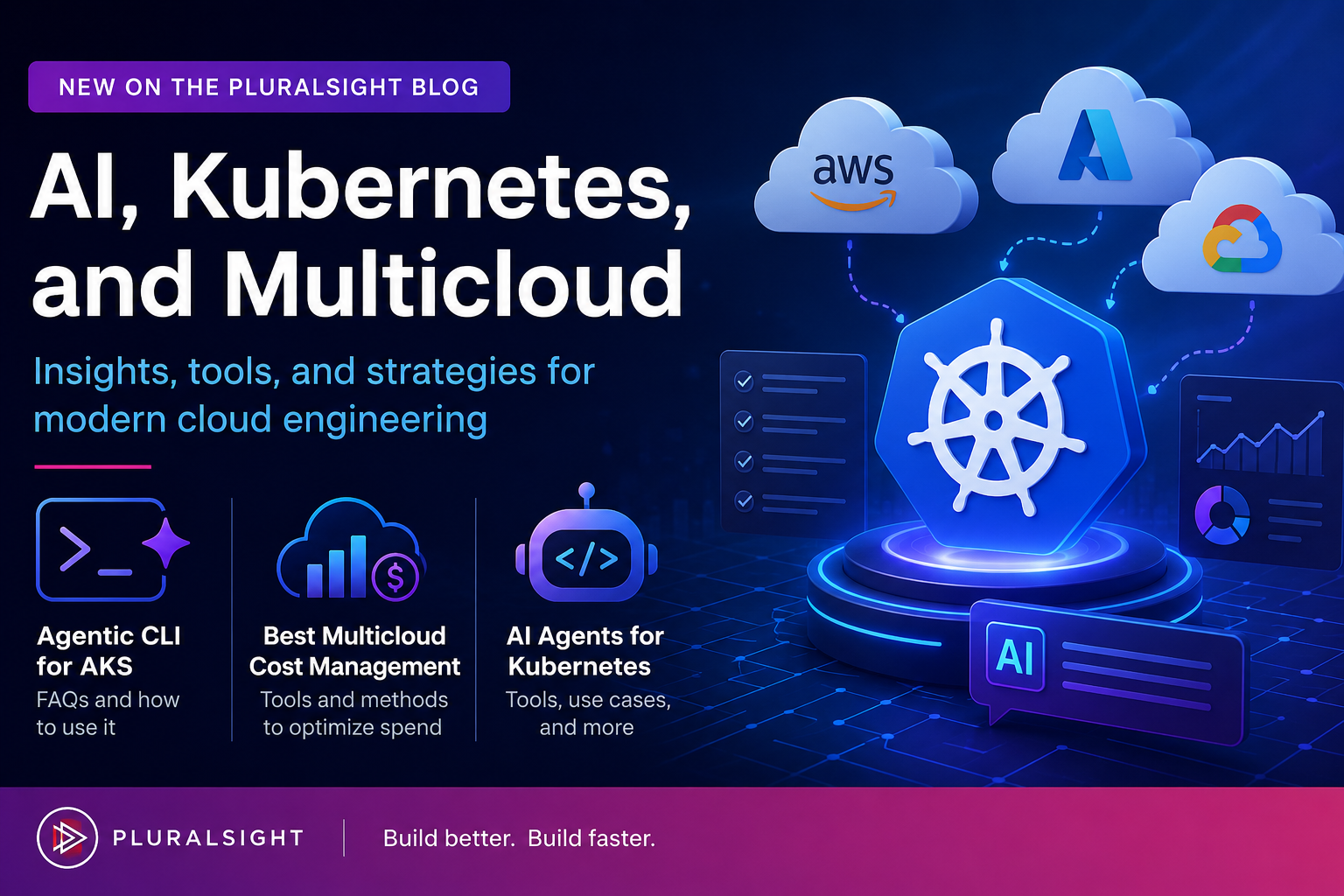
This year, I’m teaming up with my fellow Jamf, Levi McCormick (Director of Engineering at Jamf), for a session that is very close to our daily reality: Multi-Cloud Without the Marketing or Designing for Multi-Cloud Without Losing Your Mind.

Why this talk? In the cloud industry, “Multi-Cloud”, “Cloud Native”, and “Iac via Terraform” are often sold as magic pills for redundancy, cost savings, unifaction and more across clouds. But for the people actually building and maintaining these systems, it can often feel like a recipe for complexity and technical debt.

At Jamf, Levi and I work on our infrastructure efforts across AWS, Azure, and GCP. We’ve learned—sometimes the hard way—what works, what doesn’t, and where the “hype” version of cloud differs from the “production” version. We wanted to build a session that focuses on the practical:

  • How to design for portability without over-engineering.
  • Managing identity, networking, and security across different providers.
  • Avoiding the “lowest common denominator” trap.
  • Keeping your sanity while managing three different clouds.

Open Source North is a great local event to the MN Tech scene because of the high-caliber community and the focus on real-world engineering. Whether you are a cloud veteran or just starting to look at a second provider, we’d love to see you there.

The Details:

If you’re attending, please connect on LinkedIn or find us after the session. We’d love to hear how your team is tackling these same challenges!

Read more

State of App Dev Report by Docker

As devs, platform engineers, and DevOps practitioners, we all feel it: the pace of change is relentless. New tools, new architectures, new expectations, and AI. It can be hard to separate where to invest our time from hype.

That’s exactly why I want decided to write this post about the 2025 Docker State of Application Development Report from Docker.

This report is not marketing fluff. It’s based on insights from over 4,500 developers and engineering professionals and offers a grounded snapshot of how application development is actually evolving today.

Although published in 2025, this report covers long-running trends that continue to shape modern application development. Areas like containerized workflows, cloud-based development environments, AI-assisted tooling, and shared responsibility for security evolve over time rather than changing overnight.

Referencing the 2025 report ahead of the 2026 release provides valuable context. It establishes a baseline for understanding where the industry is coming from, which patterns are proving durable, and which challenges continue to persist. I’ll be looking out for the 2026 report. If you havent checked it out the 2025 report yet you should.

As a Docker Captain, I strongly encourage you to read the full report. But first, here are some of the key takeaways that stood out to me:

Remote-First Development Is Becoming the New Normal

One of the biggest shifts in 2025 is how developers are working:

  • 64% of developers now use non-local development environments as their primary setup
  • Only 36% rely primarily on local machines

That’s a significant change from previous years, and it speaks to the reality that cloud-based workflows, remote dev environments, and tools that unify development environments are now mainstream. This shift isn’t just a trend — it’s redefining how teams collaborate and deliver software efficiently.


Developer Productivity Still Faces Friction Points

The report highlights that, despite improvements in tooling and culture, many teams still experience bottlenecks in everyday work:

  • Pull requests stuck in review
  • Tasks without clear estimates
  • Slowdowns in the “inner development loop”

Even with great culture and tooling, friction still exists, especially around planning and execution. Knowing where dev productivity stalls helps us focus improvements where they matter most.


Learning Is Shifting to Self-Guided, Online Resources

Developers are reinventing how they learn:

  • 85% of respondents use online courses or certifications
  • Traditional sources like books or on-the-job training are less dominant

This highlights a bigger trend in continuous learning and self-driven skill development — especially important as the pace of change in languages, platforms, and architectures continues to accelerate.


AI Adoption Is Real, But Not Uniform

AI continues to influence how software is built, but adoption is still uneven:

  • Some teams are deeply integrating AI tools
  • Others are more cautious or selective

The report frames AI as an enabler, not a magic bullet. Developers are using AI to assist with documentation, research, and repetitive tasks, but real productivity gains depend on meaningful integration into workflows and data quality.


Security Is a True Team Effort

Security is no longer siloed:

  • Teams of all sizes report that developers, leads, and operations are involved in security
  • Only a small fraction of organizations outsource security entirely

The idea that “security is someone else’s job” is gone — fixing vulnerabilities and embedding security thinking into the development lifecycle is now a collective responsibility.


What This All Means for Developers

Taken together, these findings show a software landscape that’s:

  • More distributed and cloud-native
  • More self-taught and adaptable
  • More collaborative around security
  • Still facing persistent productivity barriers

These trends have real implications for how we build teams, invest in tooling, and think about developer experience.


Go Read the Full Report

The 2025 Docker State of Application Development Report is packed with additional insights, data, and analysis. Whether you’re a developer curious about AI adoption, a manager thinking about remote workflows, or a team lead prioritizing security practices, there’s something in this report for you.

Check out the full report on Docker’s blog:
https://www.docker.com/blog/2025-docker-state-of-app-dev

Read more

Steve Buchanan on the SuperHuman Mindset Podcast

I recently had the honor of being a guest on the SuperHuman Mindset Podcast, hosted by my good friend and respected CISO and Cybersecurity expert Felix Asare. I have always loved the name of this show because it perfectly captures its mission.

About the Podcast

The podcast dives deep into the minds of extraordinary people who break barriers, push limits, and achieve what many might think is impossible. Each episode uncovers the mindset, habits, and stories behind their success, with the goal of inspiring you to unlock your full potential and elevate every aspect of your life.

Felix is intentional about the guests he brings on. Past guests have included:

  • Former Ghanaian President John Kufuor
  • CISO Amy Bogac
  • Physician Dr. Kambiz Farbakhsh
  • Team USA Gold Medalist Chrissy Holm
  • Many more inspiring individuals

To be invited among such an incredible lineup is something I really consider an honor.

What We Talked About

In this episode, Felix and I went beyond tech and had a wide ranging conversation that touched on:

  • Where AI is heading and how to stay plugged in
  • Authoring books and creating courses including how I overcame imposter syndrome to publish my first one
  • The Modern Developer Experience and Cloud Native trends
  • What it takes to reach the next level in tech
  • What drives me personally and professionally
  • Advice for those working their way to the top

It was one of those conversations that flowed naturally, blending personal stories with big picture insights.

Watch or Listen

You can check out the full episode here:

SuperHuman Mindset Podcast – YouTube

If you are interested in tech, mindset, or just hearing stories of pushing past limits, I think you will enjoy this one.

Read more

Officially a Docker Captain!

I’m excited to share some exciting news I’ve officially been recognized as a Docker Captain 🐳!

You can find my Docker Captain profile on the Docker.com website here: https://www.docker.com/captains/steve-buchanan

For those unfamiliar, Docker Captains are a group of handpicked technology leaders who are passionate about Docker and the broader container ecosystem. The program highlights community members who are not only technically sharp but also deeply committed to sharing their knowledge and supporting others in the community. I am honored to join this community of 163 captains globally and 34 in the US. This award is similar to the Microsoft MVP award. The award is annually based.

Being named a Docker Captain is a huge honor. This recognition means a lot to me especially because it’s not just about what you know, but how give back to the community and share with others. Whether it’s speaking at conferences, creating tutorials, helping others get started, or experimenting with the latest container tools, it’s about lifting the community up together!

What This Means

As a Docker Captain, I’ll have access to:

  • Private product briefings with Docker engineers and insiders.
  • Early previews of tools, templates, and content.
  • A private Slack group with other Captains around the world.
  • The opportunity to share what I create with a wider audience through Docker’s channels.
  • A chance to meet the Docker product groups and other Captains once a year.
  • And of course… exclusive Docker swag 😎.

They already sent some cool swag in the welcome package:

But above all, it’s about continuing to give back. I’ve always believed in sharing what I know and helping others level up in tech, and this just fuels that mission even more.

What’s Next

I’ll be using my blog and other platforms to

  • Publish more Docker and container content here.
  • Share real world use cases from the trenches.
  • Highlight new and lesser known tools in the Docker ecosystem (like Ask Gordon/Docker AI, which I recently blogged about).
  • Collaborate with the global Captain crew on exciting community initiatives.

Stay tuned for more. And if you’re just starting your Docker journey, or deep into production workloads, I’d love to hear from you. Let’s connect, collaborate, and continue building awesome things, one container at a time.

A special shout out to Shelley Benhoff and Eva Bojorges for helping with this with award and opportunity! Also thanks to Docker for the warm welcome and to everyone in the community who’s been part of this journey so far. 🚢

Read more

My 9th Book – The Modern Developer Experience Published on O’Reilly!

I’m thrilled to share that my latest book, The Modern Developer Experience (ISBN: 9781098169695), is now available on O’Reilly! 🎉It is a shorter book known as a report with 4 chapters total. You can read the book on O’Reilly’s learning platform.

I am excited about this book because in today’s fast-paced tech world, developers don’t just write code, they navigate cloud platforms, cloud native tools and frameworks, integrate AI, automate workflows, and collaborate across teams to drive innovation. This book is a deep dive into the evolving role of developers and how modern tools, frameworks, and methodologies are shaping the future of software engineering.

Here is the offical book description:

DevOps has delivered transformative changes to tooling and processes, but with it comes new layers of complexity. More modern frameworks and tools, like containers, Docker, Kubernetes, Platform Engineering, GitOps, and AI can accelerate development, but understanding their unique challenges (and how to address them effectively) can make the difference between a team that struggles and one that thrives.

This report explores how organizations can improve the developer experience (DevEx) by reducing complexity, streamlining workflows, and fostering supportive environments. Whether your organization is deeply invested in DevOps or simply looking to improve team performance, this report highlights strategies to elevate your development practices and outcomes.

Here are the chapters:
1. The Modern Developer Experience

2. Raising the Bar, Providing the Right Developer Environment

3. Using AI to Enhance DevEx

4. Developer Experience and the Secure Supply Chain

📖 Whether you’re a developer, team lead, or engineering manager, this book will help you refine your processes and create an environment where developers can thrive.

🔗 Check it out here: The Modern Developer Experience on O’Reilly

Read more

1st Course Published on O’Reilly: AKS Essentials

I am very excited to announce my 1st ever course with O’Reilly has been published. This course is titled: “Azure Kubernetes Service (AKS) Essentials: Cloud Kubernetes for Developers and IT Professionals“.

It consists of: 9 modules of 4 hours of content, many demos, 7 practice quizes, and 1 final quiz.

Azure Kubernetes Service (AKS) Essentials is a comprehensive video course designed to take IT professionals and developers from beginner level to proficiency in utilizing Azure Kubernetes Service (AKS). 

Here are the: Module Learning Objectives:

  • Module 1: Understand the core concepts and benefits of Azure Kubernetes Service.
  • Module 2: Learn how to set up and configure Azure AKS.
  • Module 3: Gain proficiency in deploying containerized applications on Azure AKS using popular tools such as Docker, Kubernetes manifests, and kubectl.
  • Module 4: Explore monitoring and logging capabilities on Azure AKS, leveraging Azure Monitor, Container Insights, and Log Analytics for efficient application management.
  • Module 5: Understand and be able to configure networking components and manage network policies, as well as implement load balancing, Ingress Controllers, and service mesh for microservice architectures on Azure AKS.
  • Module 6: Implement robust security measures, including Azure AD integration, RBAC, network security groups, and secrets management, to protect applications and data within AKS.
  • Module 7: Learn to automate application deployment and updates through continuous integration and deployment (CI/CD) pipelines using GitHub Actions and GitOps.
  • Module 8: Discover high availability and disaster recovery strategies for AKS, including multi-region deployments, backups, and restoration techniques.
  • Module 9: Explore best practices and advanced topics, such as autoscaling, cluster management, and service mesh integration with AKS.

This AKS course is for you if:

  • You’re an IT professional who wants to learn how to effectively deploy and manage containerized applications using AKS.
  • You’re a Cloud Architect who designs and implements cloud-based solutions and are interested in incorporating AKS as part of your application deployment strategies.
  • You’re a Kubernetes enthusiast with a basic understanding who wants to explore AKS specifically and deepen your knowledge of managing containerized applications in the Azure ecosystem.
  • You’re a DevOps Engineer who wants to enhance your skills in managing containerized workloads using AKS and integrating CI/CD pipelines for seamless application deployment.
  • You’re a Software Developer or Engineer who is responsible for building and deploying applications and you want to harness the power of AKS for container orchestration, scalability, and automation.

Check out the course here:

https://learning.oreilly.com/course/azure-kubernetes-service/0636920982777

Here is the link to my O’Reilly profile to stay up to date on future courses, books, and more:

https://www.oreilly.com/pub/au/8326

Read more

Presenting at Experts Live Europe 2024 (SaaS and AKS)

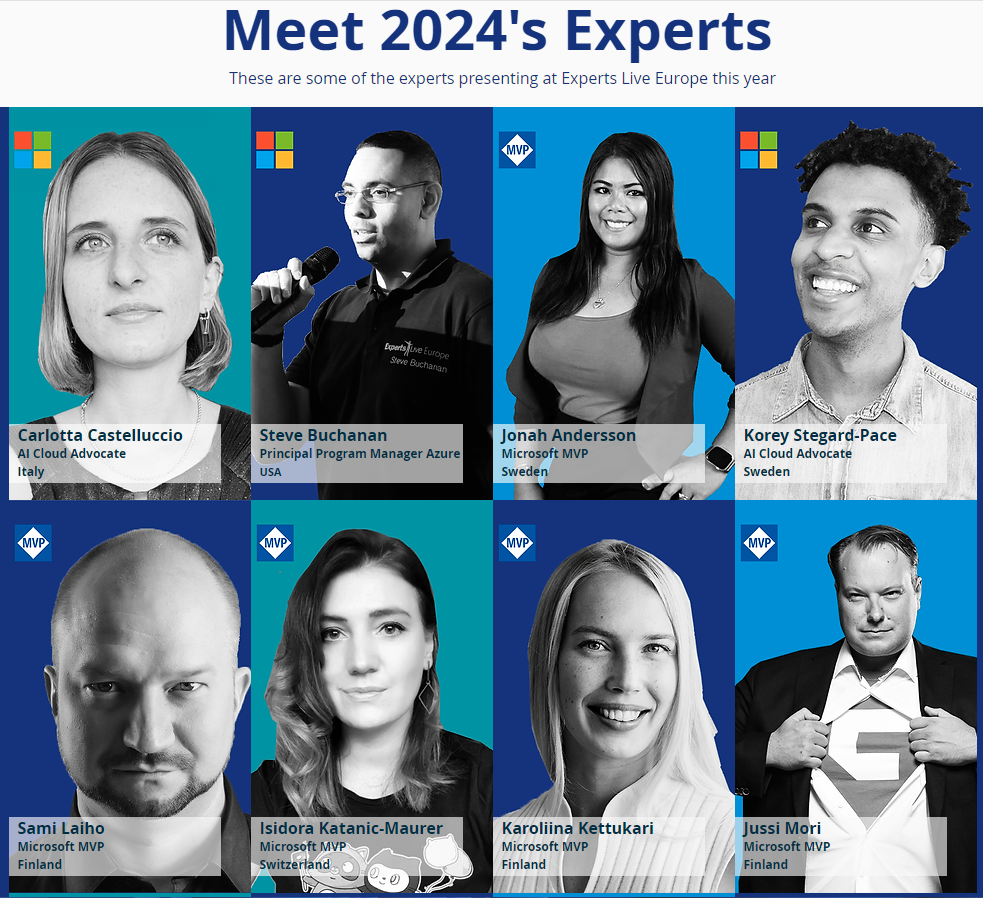
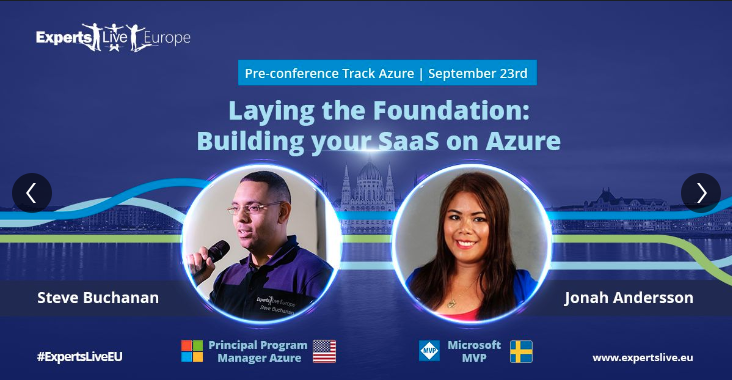
I’m thrilled to be returning to Experts Live Europe this year! 🎉 In September 2024, I’ll be back presenting once again—this time with even more to share around Azure and AKS. I’ll be co-leading one of the pre-conference sessions with Jonah Andersson, and I’m also excited to deliver a session during the main conference schedule. 🌍🎤”

You can check out the conference website here: https://www.expertslive.eu

I will be presenting a pre-con session on building a SaaS solution on Azure 🚀 and a session on how to use Chaos Studio with AKS to boost the resiliency of your AKS clusters 🔧. I hope you can make it to the conference 🙌! Here is more info about my sessions:

PRE-CON MICROSOFT AZURE: Laying the Foundation: Building Your SaaS on Azure

Join Steve and Jonah for this pre-conference session where they unravel the mysteries of building a SaaS on Azure. They will start with the basics of running a SaaS in the cloud through the foundations of SaaS, then dive deep into the nitty-gritty of tech side of SaaS on Azure through tech foundations of SaaS. In this session we will take a journey together exploring best practices, patterns, and anti-patterns, along with strategies for managing multi-tenancy, tenant isolation, data isolation, identity in multi-tenancy, and more. Plus, we’ll show you how to turbocharge your SaaS architecture and build with the Azure SaaS Development Kit. Don’t miss out!

Ask The Experts: Data & AI | Business Applications

Join us at the Speakers Booth in the Expo Hall to find your favorite speakers hanging out here during conference breaks and ask your questions. Take this opportunity to get the answers you are looking for!

Azure Kubernetes Resiliency: Safeguarding Your Deployments

Dive into the world of Azure Kubernetes Resiliency in this comprehensive session that delves into crucial aspects of safeguarding your deployments. From robust backup strategies to effective disaster recovery plans and the strategic chaos engineering approach, this session has it all. Join us for a deep exploration of the tools and techniques that ensure your Kubernetes environment remains resilient in the face of challenges. Walk away empowered with the knowledge to fortify your applications and infrastructure against unforeseen circumstances.

Read more

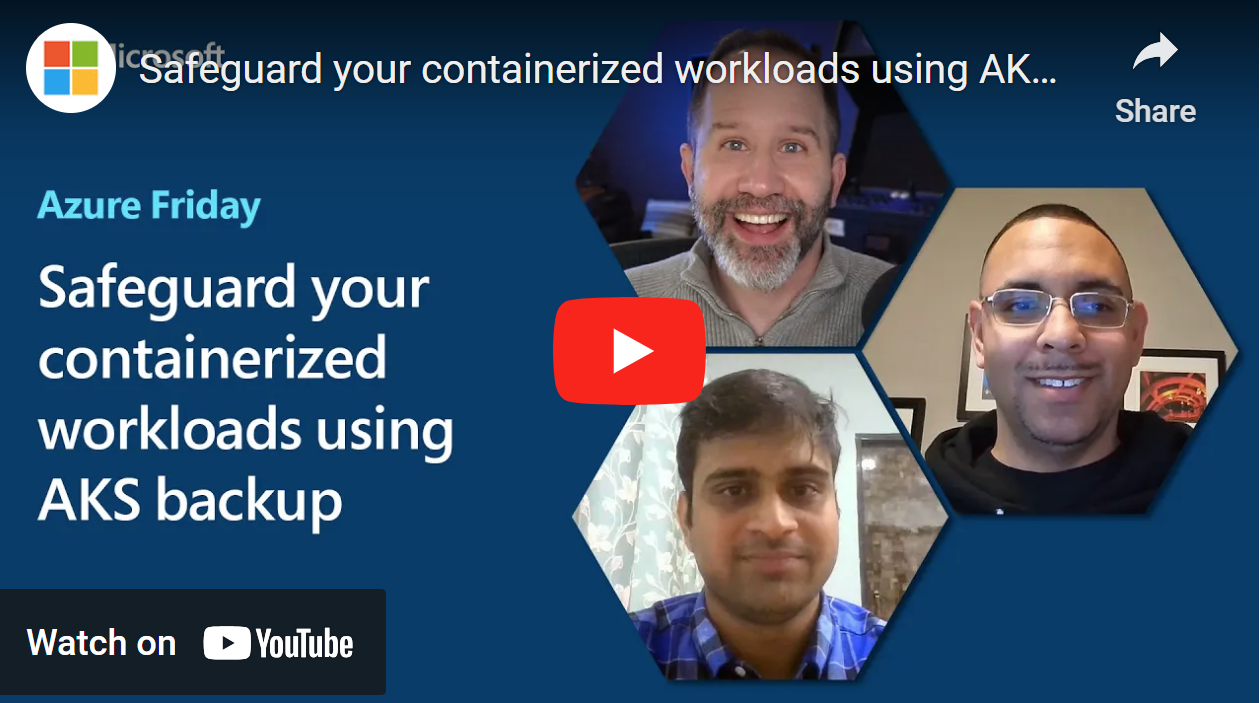
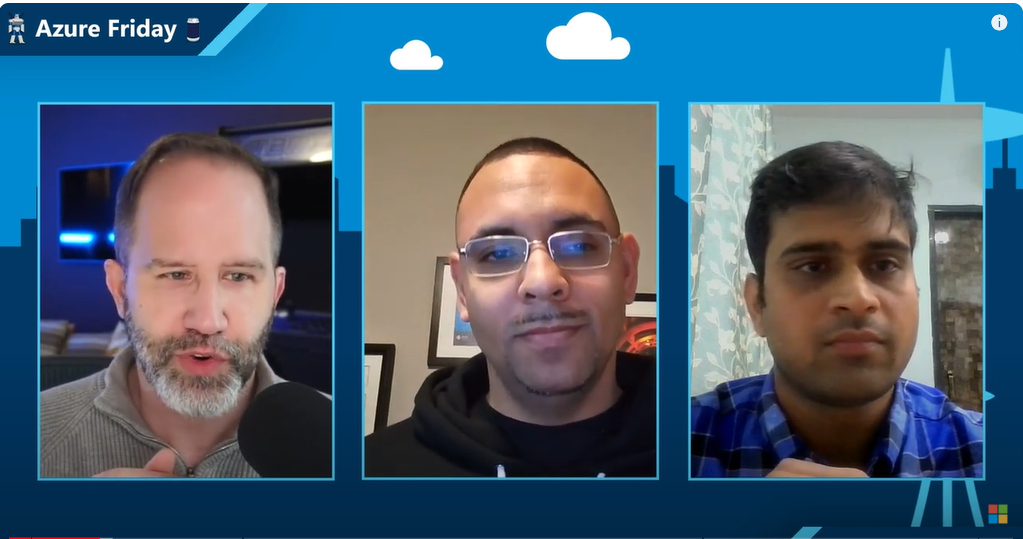
Azure Friday: Safeguard your containerized workloads using AKS backupAzure Friday:

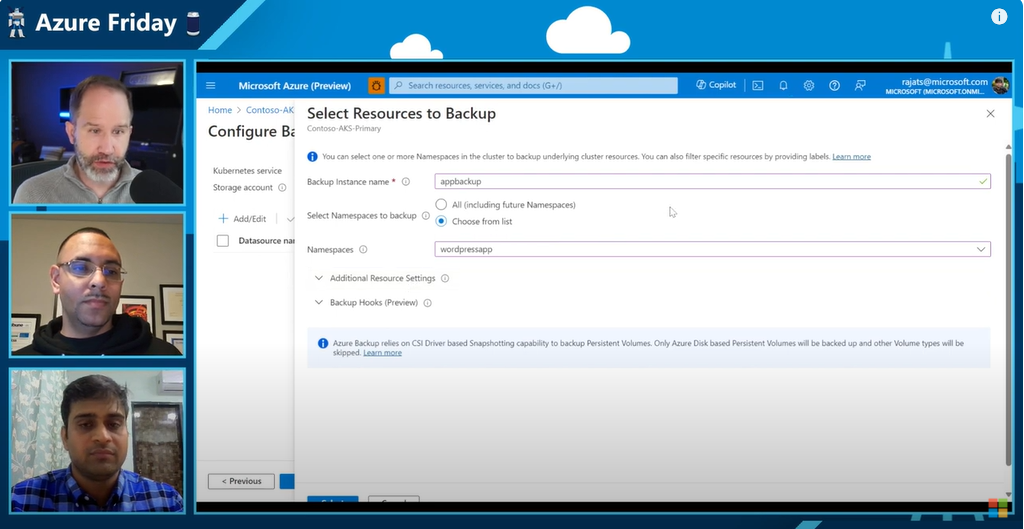
I am happy to share a new episode of Azure Friday. It was an honor to appear along side Senior Product Manager Rajat Shrivastava in this episode to talk about AKS Backup. I this episode we joined Scott Hanselman to explore the functionality of AKS backup in safeguarding containerized apps and their data on AKS.

Backup is frequently overlooked, only gaining significance when a failure necessitates recovery. In the realm of Containers and Kubernetes, it is often perceived as unnecessary. However, the reality is that backups are essential even for containerized environments. Microsoft has introduced a backup solution for Azure Kubernetes Service (AKS) and its workloads, leveraging Azure Backup.

In this episode we dove into the importance of backing up containers, even when they are predominantly stateless. The episode sheds light on why safeguarding containers is crucial and provides insights into the workings of AKS backup in ensuring the protection of workloads running on AKS.

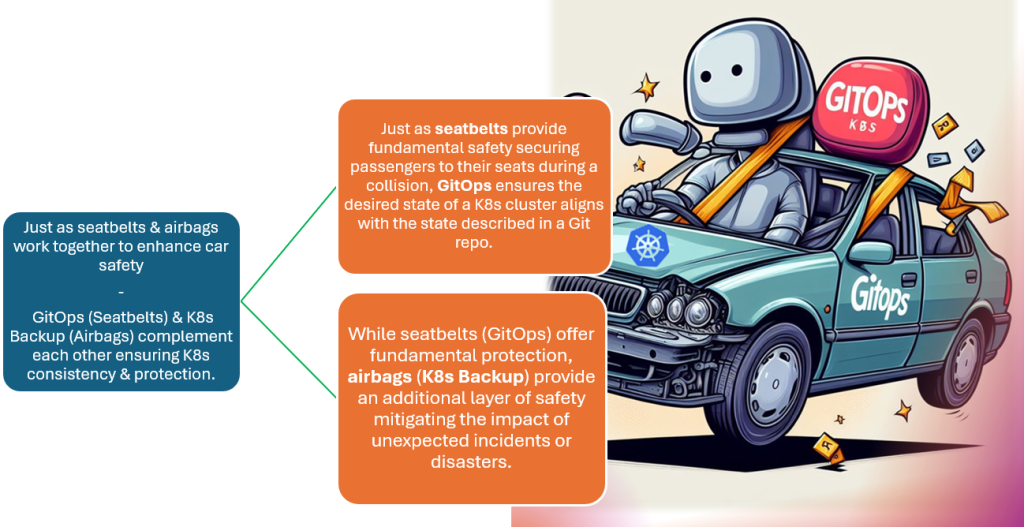
In the episode we also explore questions you may have about backing up K8s and we dive into demos showing how to protect AKS with AKS backup and how to do a restore. We even took time to answer this common question “Do I really need to backup my K8s cluster if I am running stateless apps & have everything in code i.e. IaC, CI/CD, or GitOps?”. The answer is yes. In fact one should think of it this way: “GitOps & K8s Backup are like Seatbelts & Airbags”. Here is a graphic to break this down further:

You can check out the episode here:

Addtional resources on AKS and AKS Backup:
■ Backup for AKS: Cloud native, Enterprise ready, Kubernetes aware backup – https://aka.ms/azfr/766/01
■ What is Azure Kubernetes Service backup? – https://aka.ms/azfr/766/02
■ Cluster extensions – https://aka.ms/azfr/766/03
■ Prerequisites for Azure Kubernetes Service backup using Azure Backup – https://aka.ms/azfr/766/04
■ Create a Pay-as-You-Go account (Azure) – https://aka.ms/azfr/766/payg
■ Create a free account (Azure) – https://aka.ms/azfr/766/free

Read more

From SysAdmin to Platform Engineer with Steve Buchanan on RunAsRadio

I was recently a guest on the RunAsRadio podcast. This was the second time being on the show. The last time was 4 years ago. You can catch the old episode here: Terraform vs Bicep/ARM with Steve Buchanan.

This new episode is #924 and is titled: “From SysAdmin to Platform Engineer with Steve Buchanan“. On this new episode we talked about Platform Engineering and a bunch of other stuff.

Here is the description from the episode:

Aren’t we all platform engineers? Steve Buchanan says yes!

But there’s more to it. Steve talks about the mindset of looking beyond individual products that we might have skills with and owning the entire problem of providing platforms for your organization to get work done.

The conversation dives into the many products that can help our applications function better and the challenge of making them secure and fast. Are containers the solution? Possibly!

It’s your platform; focus on the fundamentals and go further!

I had a great time chatting with Richard and we didn’t even mention AI until 40 minutes in. haha

You can check out the episode here:

https://runasradio.com/Shows/Show/924

or here:

Read more

Learn Live: Taking Your Intelligent App Global with AKS with the Steves

I will be co-presenting an AKS Learn Live this month with Microsoft Principal Cloud Advocate Steven Murawski on “Taking Your Intelligent App Global with AKS”!. It will be moderating by Principal Product Manager Brian Redmond!


We will touch on using Azure Front Door and Fleet Manager. Description of the session:

Once we have our intelligent application running, it’s time to make it scale. Using globally-scalable services like Azure CosmosDB and Azure Front Door, along with AKS Fleet Manager, we can take bring our intelligent apps closer to their consumers, while providing a consistent operating experience for the developers and operations personnel responsible for the service.”

You don’t want to miss this one!

Register here:

https://lnkd.in/gbJXzWSJ

__Update__

If you missed the session, no worries. You can access the lab here:

https://moaw.dev/workshop/?src=gh:smurawski/moaw/learn_live_spring_2024/workshops/aks_global_scale/

You can watch the recording of it here:

Read more